
Falling for the rocks: How Gurmeet Kaur carved a place in global geology
From navigating gendered spaces in academia to shaping global standards on heritage stones, a geologist charts a meteoric rise along a rocky path
By Jayanti Dutta
| Posted on February 12, 2026
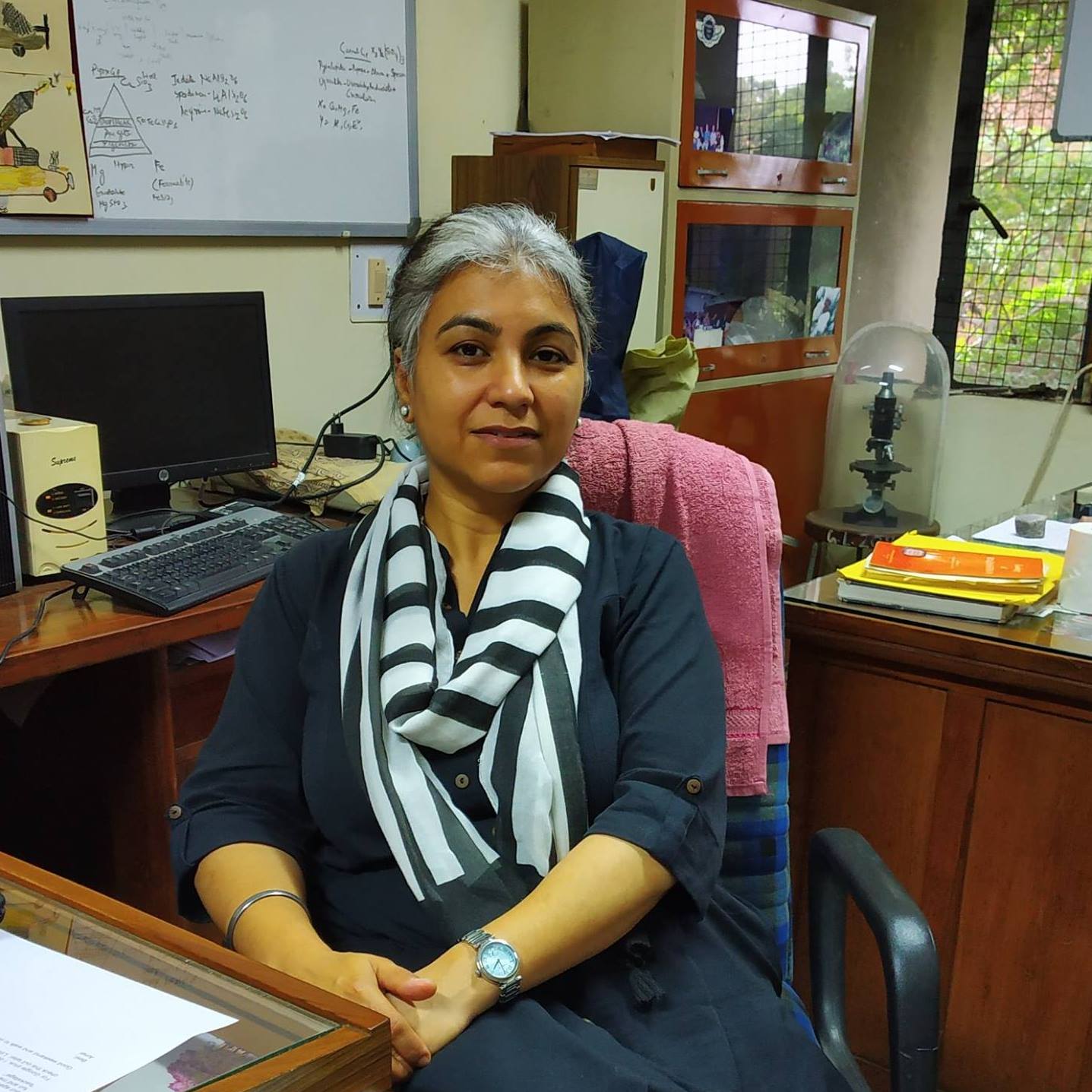
When Gurmeet Kaur signed up for a degree in Geology (Honours) at Panjab University, Chandigarh, it was not because she had always dreamt of becoming a geologist. Like the career paths of several middle-class girls who do well academically, the general advice from teachers, neighbours and relatives, or the “pressure group”, is to take up the science stream, and Kaur was no different. One of three daughters in a family that already had working women in the previous generation, Kaur too envisioned a future that involved securing a job in a science-related field.
From the outset, she was attracted to the subject. She enjoyed field visits to geological sites, decoding the story of the Earth through rocks and reflecting on the triviality of the human lifespan on the geological timescale. Working on her PhD under a mentor who was a perfectionist and a hard taskmaster was difficult. She wrote eight drafts before finalising her thesis, but, as she realised later, the experience grounded her thoroughly in the discipline.
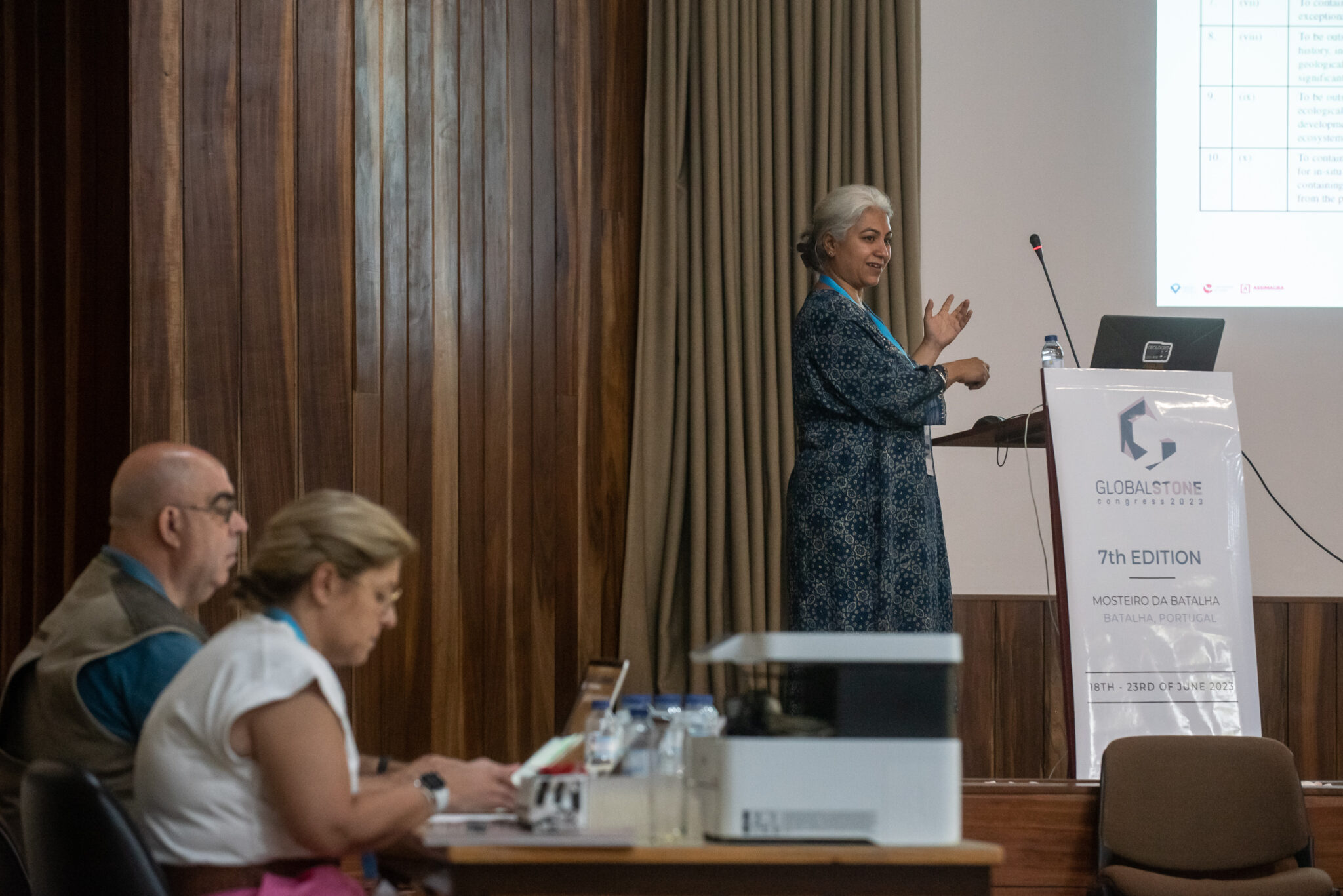
Delivering the keynote address at the 7th Global Stone Congress in Batalha, Portugal in 2023
Joining the Department of Geology at Panjab University as a faculty member in 2005 ensured that she could continue working in the subject. However, it was far from a smooth journey. Men outnumbered women faculty by a ratio of 6:1, the department had a condescending atmosphere, and she often felt unwelcome. Dr Kaur recalled that she had to raise the issue of the absence of a ladies’ washroom during a staff meeting, only to be mocked and advised by a male colleague to arrange a mobile toilet for herself.
Her initial years were marked by toxic departmental dynamics and the burden of academic housekeeping work—low-status, time-consuming and tedious tasks on which she spent a disproportionate amount of time. These kept her perpetually busy without contributing to “scientific productivity”. Bitterness grew, and she considered leaving the department to escape the stress. “It was my father,” Dr Kaur recalled, “who assured me that I had to focus on my academics and that things would improve.”
Showing up for science
In 2010, she got an opportunity to attend a training programme on kimberlites, an igneous rock type, conducted in Bengaluru by Prof Roger Mitchell from Lakehead University, Thunder Bay, Ontario, also the Chair of the International Kimberlite Conference. She was the only woman in a group of thirty geologists. Though she felt lonely, she did not hesitate to ask questions, acquire new knowledge, and engage in hands-on work.
In 2012, her poster won the Best Poster Presentation award at the 10th International Kimberlite Conference held in Bengaluru. Titled “Petrology of P-5 and P-1 Kimberlites from Lattavaram Kimberlite Cluster, Wajrakarur Kimberlite Field, Andhra Pradesh, India”, it presented evidence for the reclassification of the Wajrakarur (Andhra Pradesh) kimberlites as lamproites, based on her work on typomorphic minerals in these exotic rocks. The achievement drew international attention to her research and led to an invitation to pursue postdoctoral research at Lakehead University in Thunder Bay, Ontario, Canada. She worked on alkaline igneous rocks there over three consecutive summer research seasons from 2013 to 2015, further strengthening her academic profile.
Global platform
Dr Kaur’s extensive investigations on stones used in North Indian monuments resulted in integrated datasets combining petrography, mineralogy, durability metrics and quarry histories. This work led her to the International Union of Geological Sciences (IUGS), one of the largest scientific organisations in the world, with 63 active member countries, which encourages international cooperation in the Earth sciences in relation to human welfare.
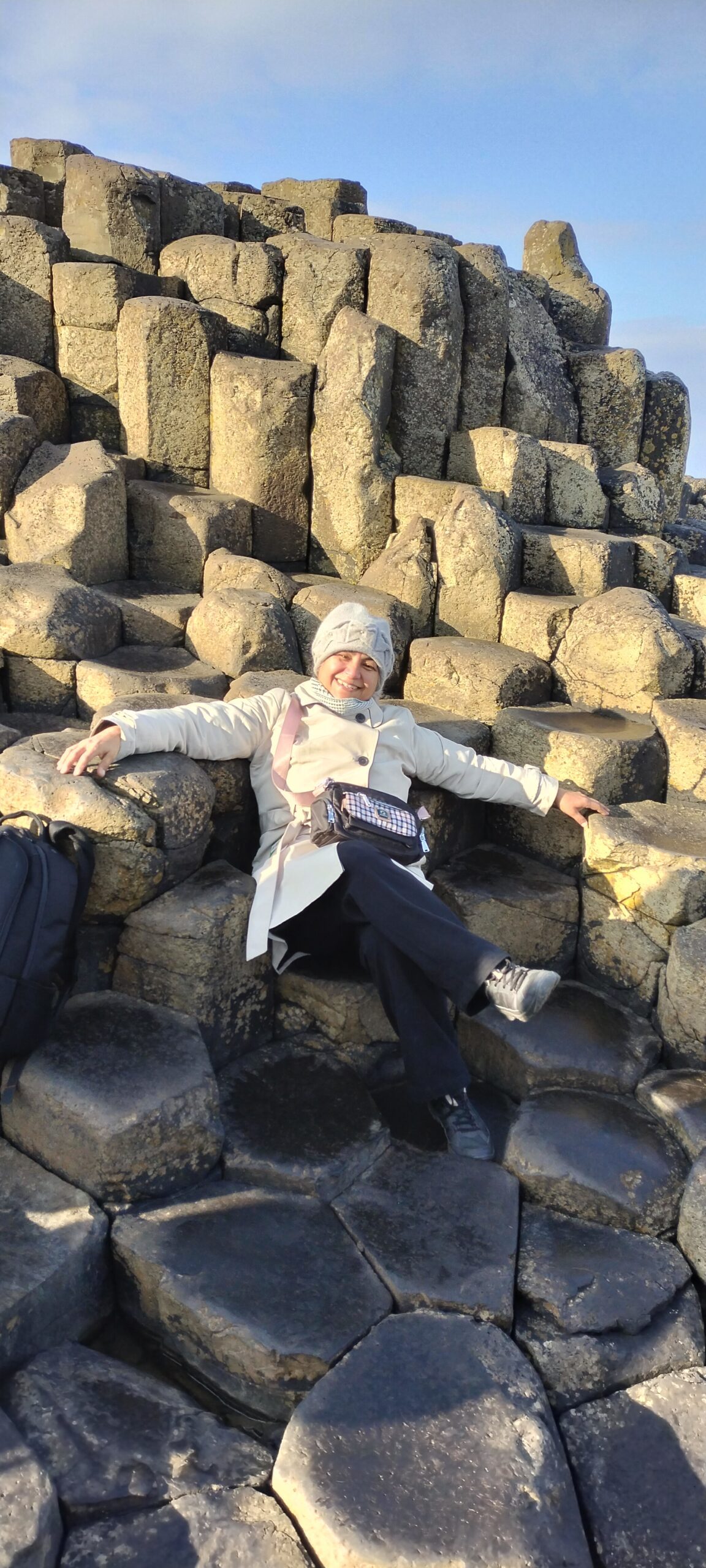
Field trip to Giant’s Causeway in Northern Ireland in 2024
Globally, it was increasingly recognised that understanding the evolution of civilisations over millennia requires close attention to the historical use of natural stones. The geological attributes of stones used in monuments and historical quarries need to be identified and documented. In response, IUGS established the International Commission on Geoheritage (ICG) to recognise geological heritage sites, geo-collections and heritage stones, and to compile and maintain geoheritage databases. Under the ICG’s Heritage Stone Sub-commission (HSS), data on stones from different countries is documented and designated as heritage stones.
Professor Kaur’s exhaustive data on monumental stones from India became instrumental in demonstrating the scientific distinctiveness and long-term performance required for IUGS designation. Her peer-reviewed papers, detailing a stone’s provenance, cultural significance and mechanical properties with systematic rigour, were repeatedly cited in nomination dossiers, providing authoritative scientific validation.
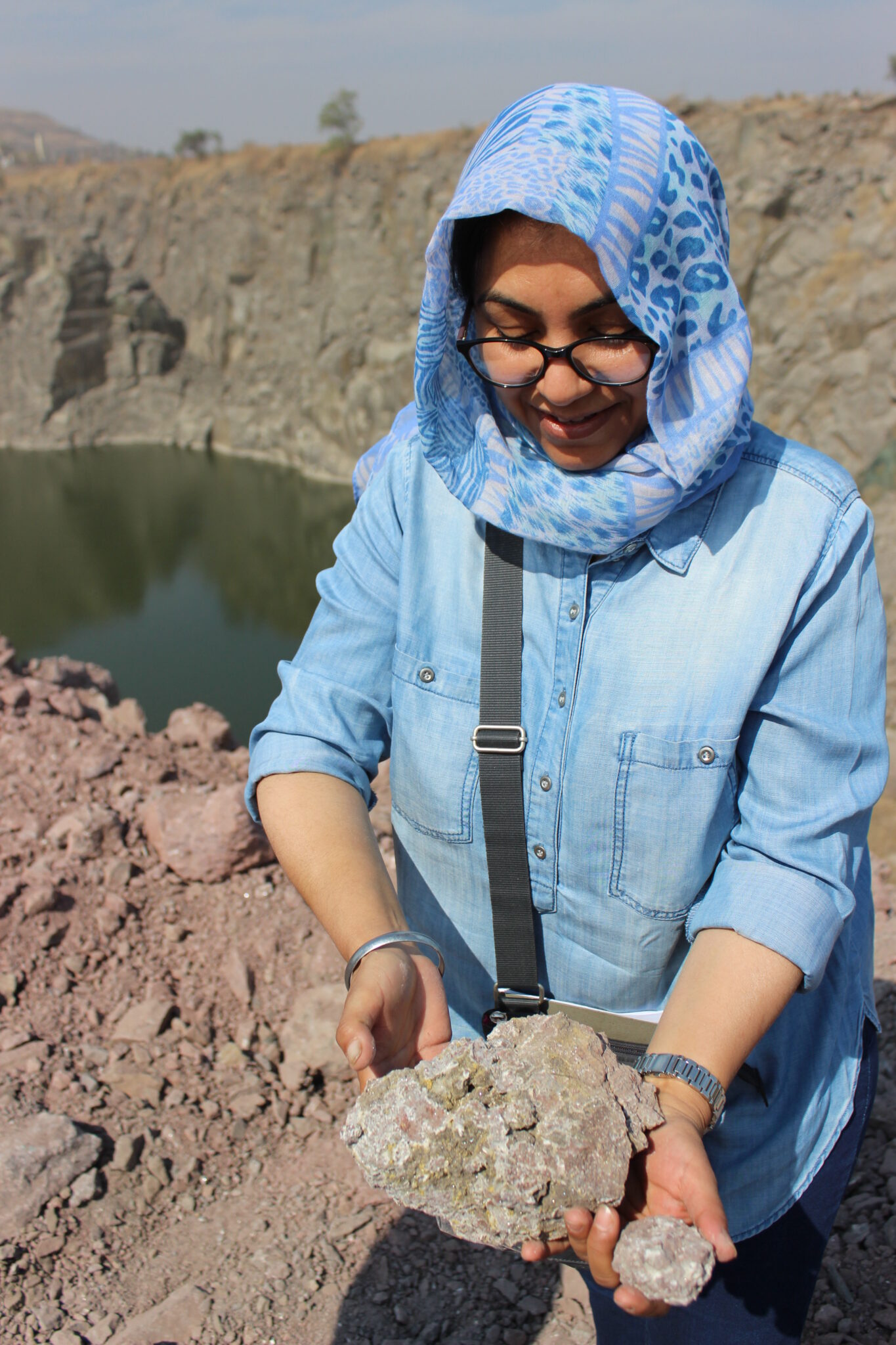
Filed work on the Deccan basalt terrain in Pashan, Maharashtra
From 2017 to 2020, she served as a Vice-Chair representing South Asia in the Heritage Stone Sub-commission, where she played a transformative role in advancing the global heritage stone initiative. She strengthened criteria, protocols and scholarly rigour, while also ensuring that India’s rich geological and cultural stone legacy received international visibility. She coordinated research networks, streamlined nomination procedures and facilitated the harmonisation of multidisciplinary datasets required for heritage stone validation.
In 2020, Professor Kaur contested for the post of Chair of the HSS and was elected with 33 out of 52 votes in an international election, an affirmation of the professional credibility she had built on a global platform.
Viewing geology through an expansive, interdisciplinary lens, Prof Kaur has collaborated with archaeologists, historians and architects in her work on Indian heritage stones. Her book, published in 2020, titled Natural Stone and World Heritage: Delhi–Agra, India, focused on the geological characteristics of the famous Makrana marble and sandstone variants of the Vindhyan Basin and Delhi quartzite. The IUGS book The First 55 IUGS Heritage Stones, which she co-edited, lists seven Indian stones now designated as IUGS heritage stones. Through keynote lectures at the Global Stone Congress in Portugal, the International Stone Workshop in Turin, geoheritage events in Zumaia, and engagements with major Indian institutions, she has raised international awareness of India’s vast geoheritage, ancient rock formations, fossil beds and geological marvels that narrate Earth’s story across billions of years.
These sites are not only scientific treasures but also cultural markers, intertwined with local folklore and traditions. Many, however, remain neglected, threatened by encroachment, mining and a lack of public awareness. Their destruction would represent an irreversible loss to science, education and culture. Kaur’s agenda is to place many more Indian stones on the heritage list, for which she remains committed to rigorous research.
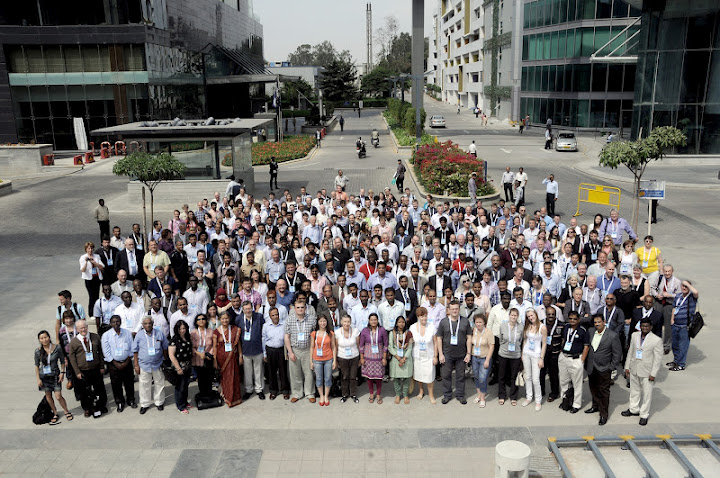
As part of the delegation at the 10th International Kimberlite Conference in Bengaluru in 2012
Support system
Her family—parents and sisters who have seen her grow from a happy-go-lucky youngster into a serious, respected, globe-trotting academic—have been her constant support. One of her sisters, Anuvinder, who has accompanied Kaur on several field trips, recalls her remarkable dedication while navigating old, rugged and deep quarry bases, some in precarious conditions. On one occasion, she even travelled by tractor when no other vehicle could reach a limestone quarry site in Jaisalmer.
Another sister, Satwinder, recalled that life was not always smooth for Kaur. She went through a difficult phase in her personal life but, instead of breaking down, immersed herself in academics and emerged stronger. She never compromised on her studies or professional goals. With her persistence, she re-established herself in her field, demonstrating how challenges sharpen resolve.
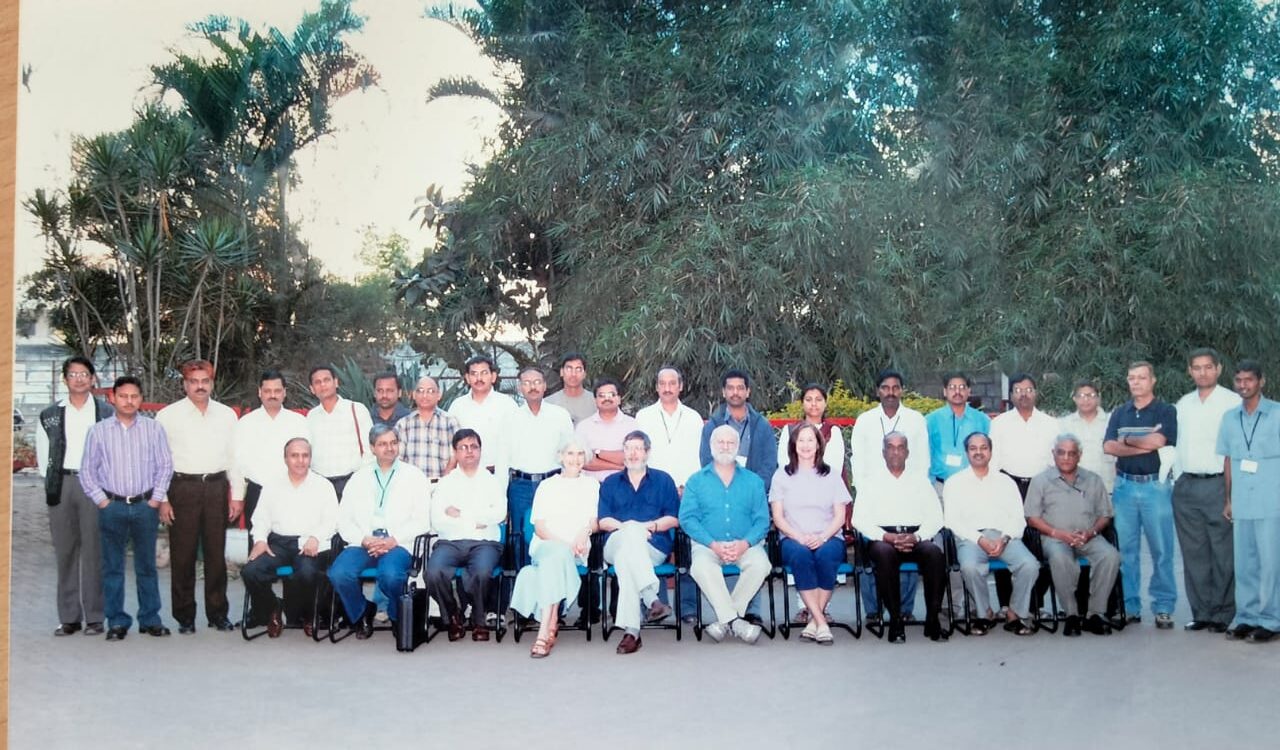
Among the ‘Kimberlites’ trainees in Bengaluru in 2010
As a teacher and research supervisor, Kaur is known for treating her students and research scholars as extended family. She invests in them both academically and emotionally, celebrates their smallest achievements, shares credit generously, and pushes them to grow while ensuring they feel supported. At home, her passions are equally evident, experimenting with spices and herbs in the kitchen, tending to her plants and stray animals, and spending time with her dog, Kalibella.
About the author
Jayanti Dutta is a Professor at Panjab University, Chandigarh and has been rooted in the academic ecosystem for over 25 years. With a PhD in Cytogenetics, her scientific journey began with a microscope but soon expanded to encompass training, mentoring, writing and public engagement in higher education. She takes pride in enabling educators to perform their roles more meaningfully. Her publications based on interdisciplinary exploration move between research, creative non-fiction, book criticism and science popularisation. She finds stories in classrooms, laboratories, public places and city corners, and tries to tell them with honesty and wonder.
Add a Comment