
How an anthropologist helped facilitate first contact with ‘hostile’ Andaman & Nicobar tribes
Madhumala Chattopadhyay spent six years living among the tribes of the Andaman Islands, and her career shows how ethical responsibility is central to meaningful fieldwork.
By Jayanti Dutta
| Posted on February 23, 2026
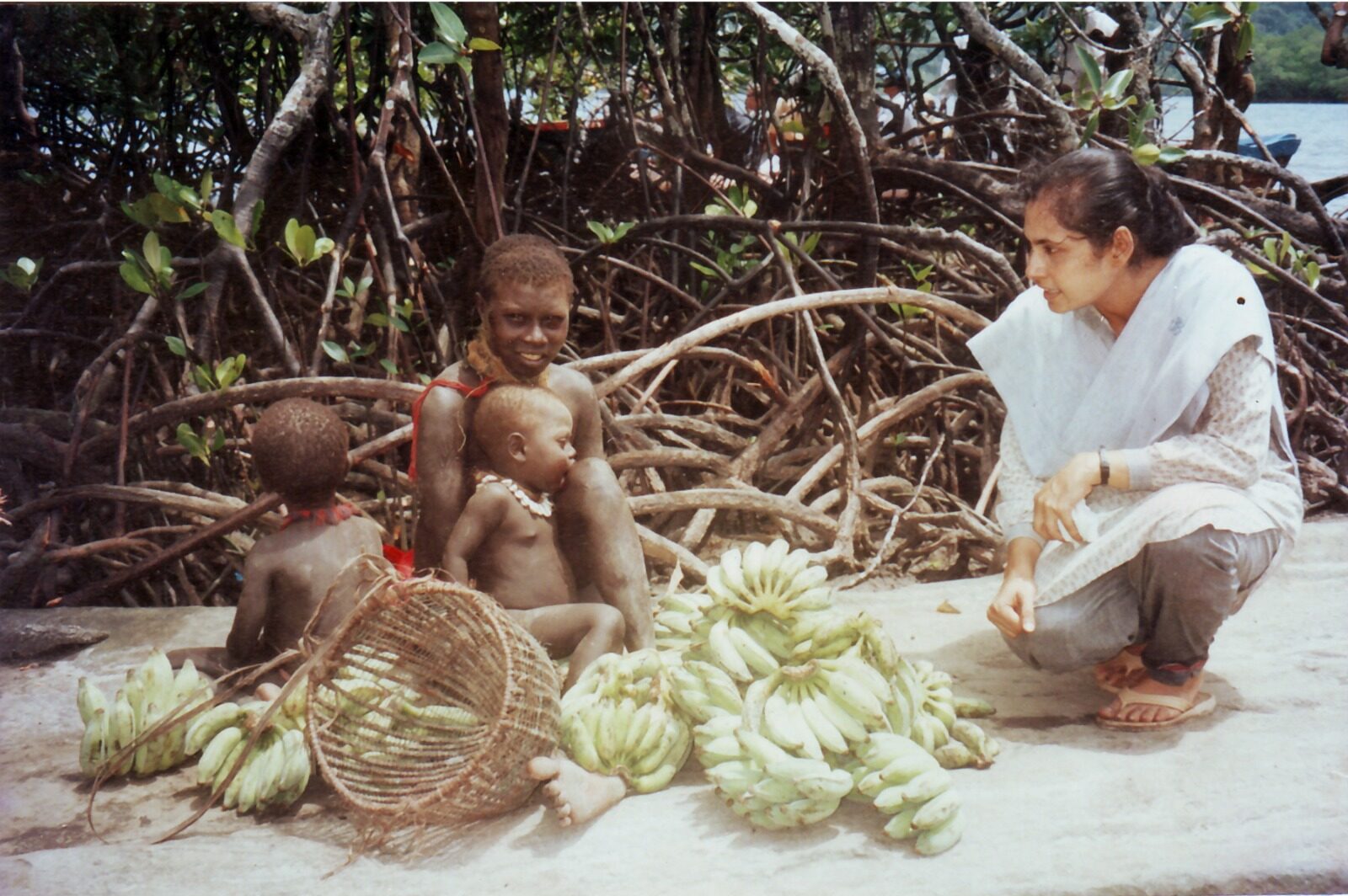
Madhumala Chattopadhyay had been curious since her childhood in Sibpur, Howrah, West Bengal. One morning, when she was about twelve, a small news item in the local newspaper caught her attention: a baby had been born in a tribal community in the Andamans. This was an event worth celebrating, as the community’s numbers were dwindling.
She immediately asked her father to plan the family’s annual vacation to the Andamans. She wanted to see the tribals herself. Her father told her that such places were not open to tourists. If she truly wished to go there, she would have to become a scientist. Only researchers, he explained, were allowed access to these protected worlds.
If she wished to go, she would have to become one.
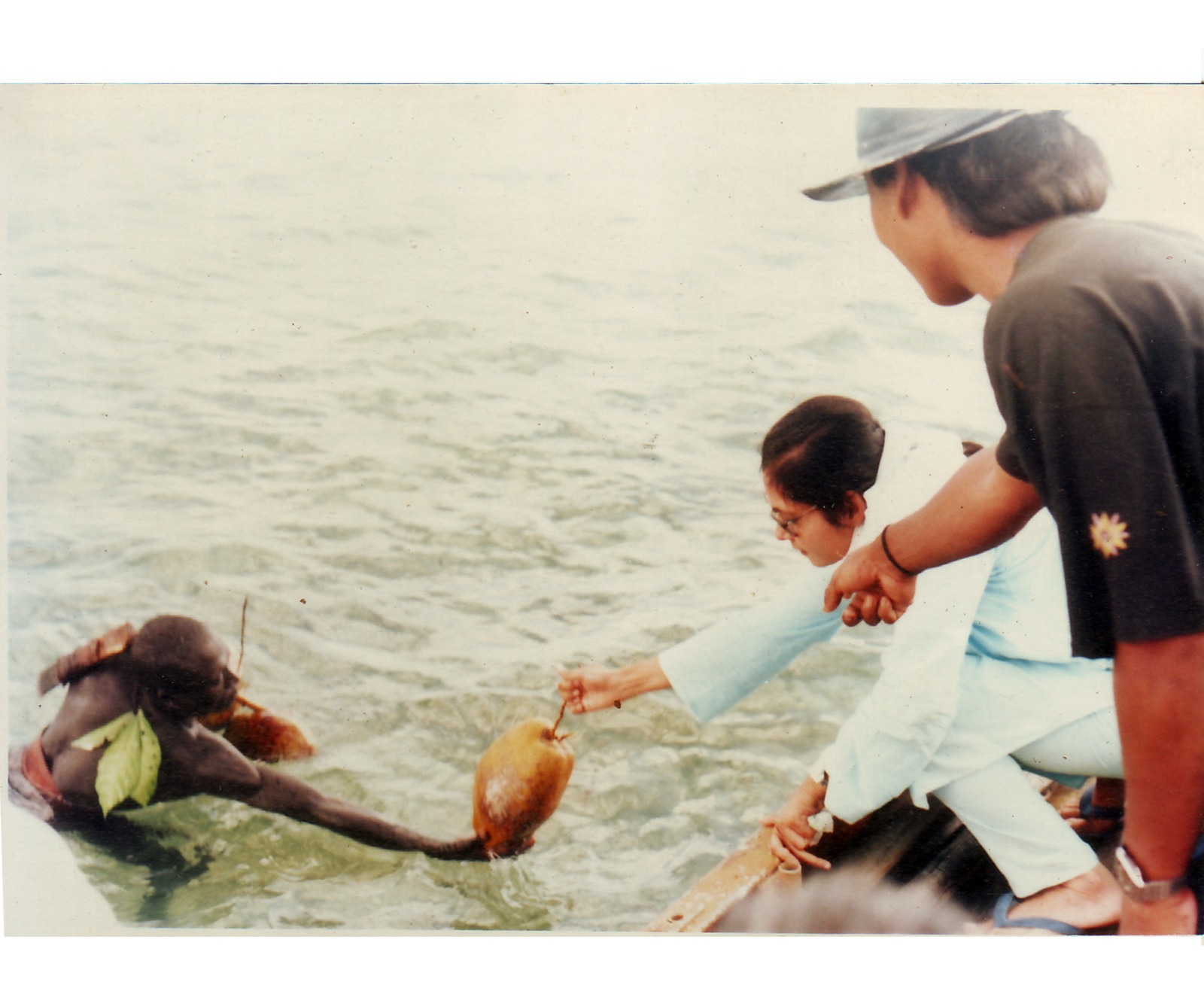
Navigating her first friendly contact with the Sentinelese on Jan 4, 1991
When Madhumala signed up to study Anthropology at the University of Calcutta, this long-held desire guided her hand. After registering for her PhD, she applied in 1989 for the position of Research Associate at the Anthropological Survey of India (ASI), Port Blair, in the Andaman and Nicobar Islands.
Officials at the ASI were taken aback by her choice and asked her to submit an undertaking stating that she was aware of the dangers of working with uncontacted peoples and would not hold the government responsible if she were injured or killed, or faced any untoward incident during her research, and that she was accepting the assignment at her own risk. When she produced the undertaking nonchalantly, the ASI asked for affidavits from her parents as well.
Her father, an accounts officer with the Indian Railways, and her mother, a quiet but courageous woman, encouraged Madhumala to follow her heart.
For the next six years, from 1989 to 1995, she remained immersed in the tribal communities of the Andaman and Nicobar Islands, living among them and recording key ethnographic, nutritional, and maternal and child health data, contributing significantly to knowledge about these communities. She researched six tribes of the islands, the Onge, the Sentinelese, the Jarawas, the Great Andamanese, the Shompen, and the Nicobarese, and later published her findings in several monographs of the Anthropological Survey of India, academic journals, and a book titled Tribes of Car Nicobar.
During her research expedition, Dr Madhumala closely worked within the tribal communities by residing with them. She survived on bananas and coconuts for long periods as she could not eat the food that the tribals offered, slept in their huts and learnt their language. She became so trusted that the women would ask her to babysit. She recalls never feeling unsafe among the tribals who accepted her without hostility.
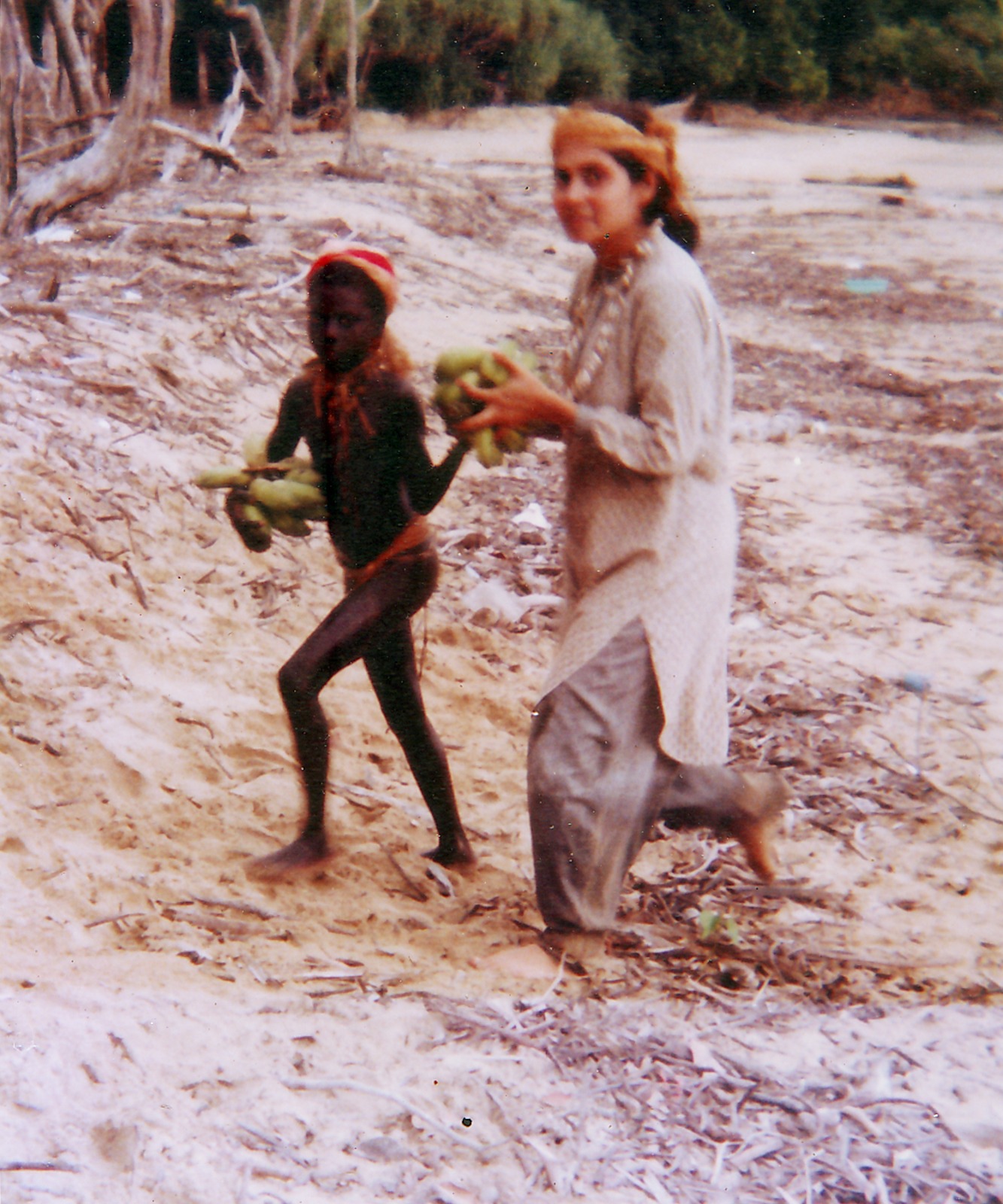
Madhumala, wearing seashell ornaments gifted by the women of the community, helps a Jarawa girl carry bananas and coconuts from the seashore to her hut
Her most noted achievement, however, was becoming the first anthropologist to make friendly contact with the “hostile tribes” of Sentinelese and the Jarawas. These tribes were considered to be hostile and any effort to contact them resulted in inimical actions.
In the 1990s, a government project was planned to establish friendly contact with these tribes. The expedition, to be led by the Director of Tribal Welfare of the Andaman and Nicobar Administration, was not without risk, and officials from the Anthropological Survey of India were to accompany the team. Madhumala volunteered to participate.
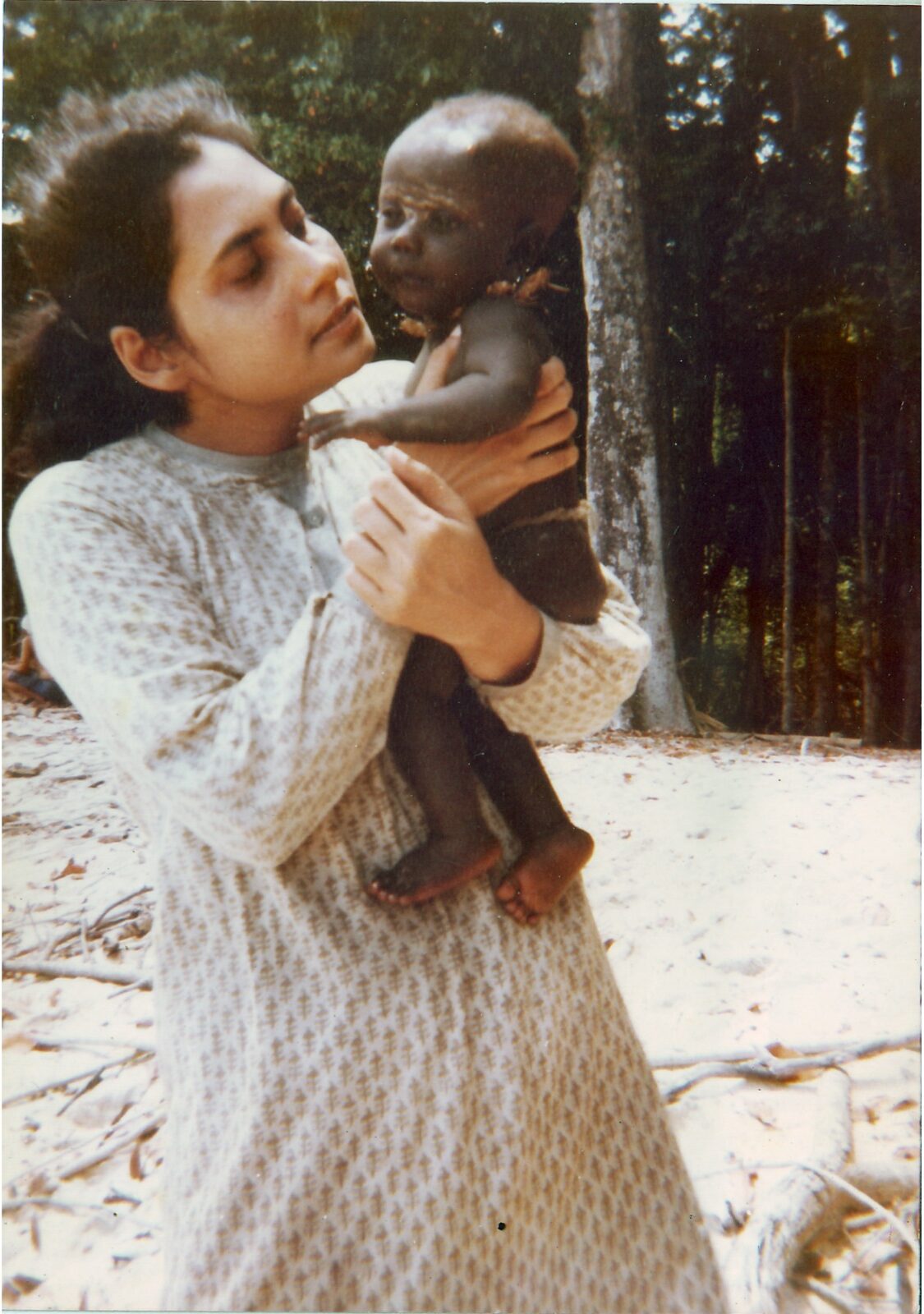
Madhumala with a 3-month-old Jarawa baby in 1991
On 4 January 1991, as the endeavour began, other ASI members reportedly developed cold feet at the last moment and withdrew. Madhumala nevertheless joined the expedition as the anthropological expert, along with the Director, a medical officer, an official photographer and nine support crew members. She was the only woman in the 13-member team.
The team travelled to North Sentinel Island aboard the local administration’s ship, MV Tarmugli, and approached the island on a smaller boat. Madhumala and the team initiated contact by offering coconuts to the armed tribesmen standing on the beach. Speaking in the language of the Onges, which the Sentinelese were believed to understand, she encouraged them to accept the gifts.
At first, they hesitated. Gradually, persuaded by her calm and friendly gestures, they approached the boat and received coconuts from her hands. It was recorded as a rare instance of non-hostile contact with the Sentinelese. Her composed presence helped reduce tension during the encounter, and the team was able to approach without being attacked, an unusual outcome in earlier expeditions.
The expedition returned on 21 February 1991. This time, the tribesmen approached without bringing their weapons and carried sacks to collect coconuts. The lowering of visible defences was interpreted as a gesture of relative trust.
On 5 and 6 January 1991, the expedition also visited the Jarawa community. On the second day, Madhumala was taken to the beach by Jarawa women and decorated with shell garlands as a sign of friendship and acceptance.
Madhumala approached this field work not merely as data collection, but as an ethical and dialogical process that requires humility, empathy, and critical self-awareness. She rejected the image of the anthropologist as an adventurer or conqueror of unknown worlds. In her work with the Jarawas and other tribes, the anthropologist appears instead as a witness, someone who observes, interprets, and records without claiming authority.
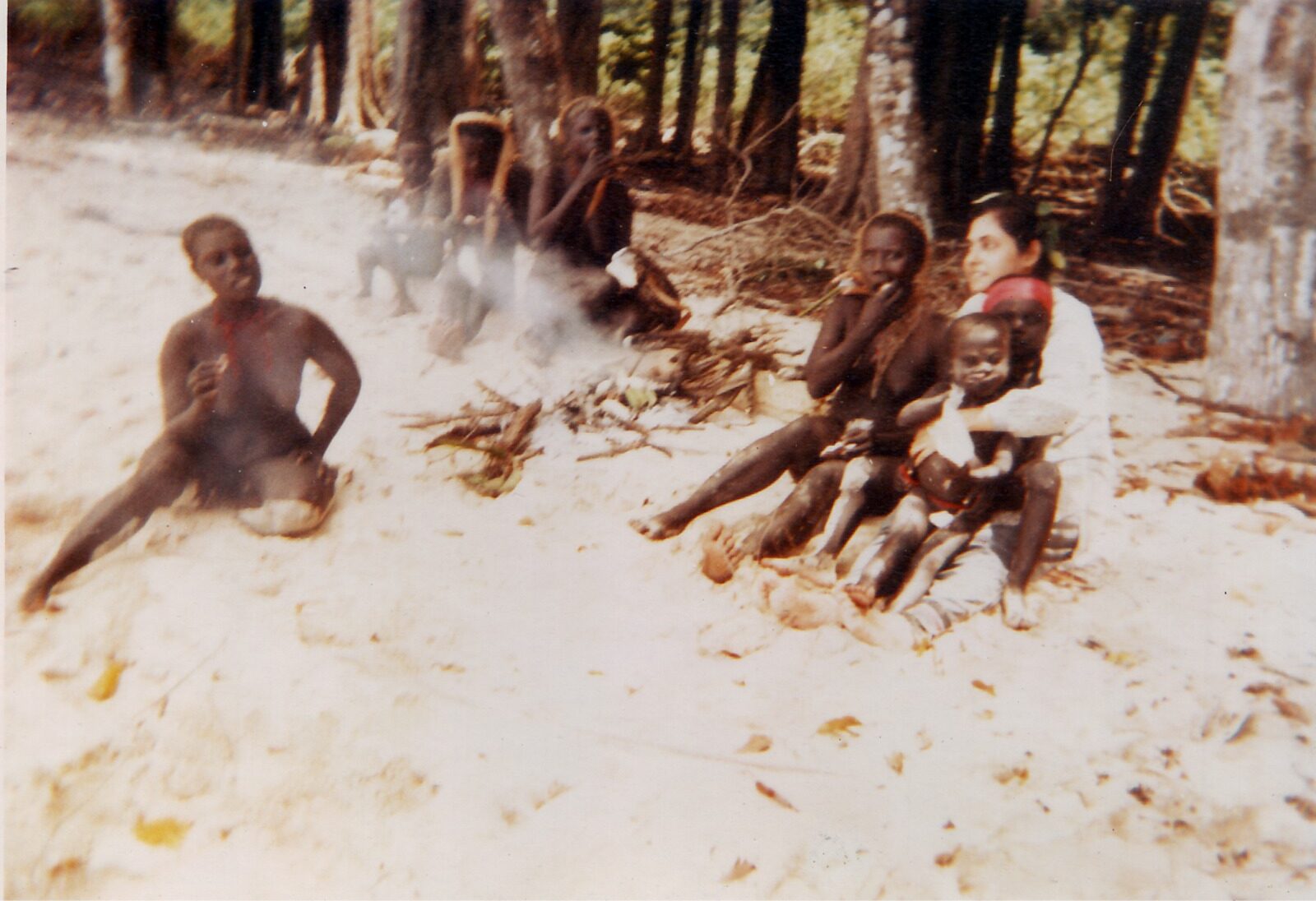
Living the anthropologist’s dream. With a couple of Jarawa children sitting on her lap, Madhumala shares roasted green banana and coconut with community members
Professor Abhik Ghosh of the Department of Anthropology, Panjab University, Chandigarh, has described her work as offering a rigorous and reflective account of contact anthropology in India. Her experiences showcase the methodological limits, ethical responsibilities, restraint and humility required when engaging with highly vulnerable communities. Her work has reaffirmed that, in certain contexts, the most ethical anthropological practice lies in deliberate non-intervention, Ghosh said.
Her role in these expeditions, however, was not without consequence. She recalled that some seniors were displeased when her name appeared in the media or when she received credit for the historic encounters. She said that she was not permitted to sign reports she had written, and other names were inserted. In 1995, she was transferred to ASI Nagpur.
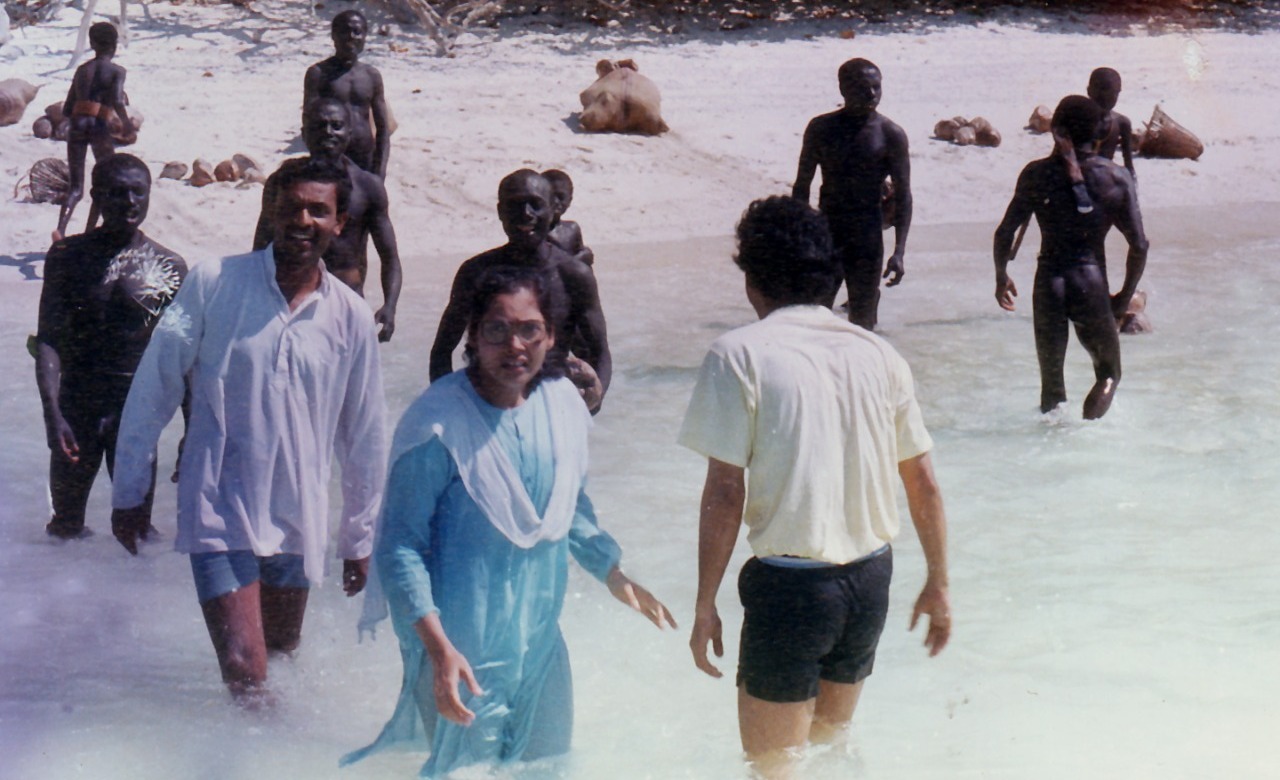
Second friendly contact with the Sentinelese on Feb 21, 1991
She had hoped to continue her research with the ASI, believing that the experience she had painstakingly built would find meaningful application.However, there was no place for her in the ASI, which let go of a researcher who was cut out to do anthropological research among the tribal communities. She then moved in 1998 to the Ministry of Social Justice and Empowerment in New Delhi as a research officer, retiring as Joint Director in 2021 after more than two decades in administrative service.
The authorities did turn to her when they needed to draw upon her deep experience of working with the Andaman and Nicobar tribes. During the measles outbreak in 1999, she offered expert advice. After the 2004 tsunami, she was consulted on the care of orphaned tribal children. She predicted that the children would not be handed over to the government’s Central Adoption Resource Agency but would instead be absorbed within their own communities and raised in extended family networks. The prediction proved accurate.
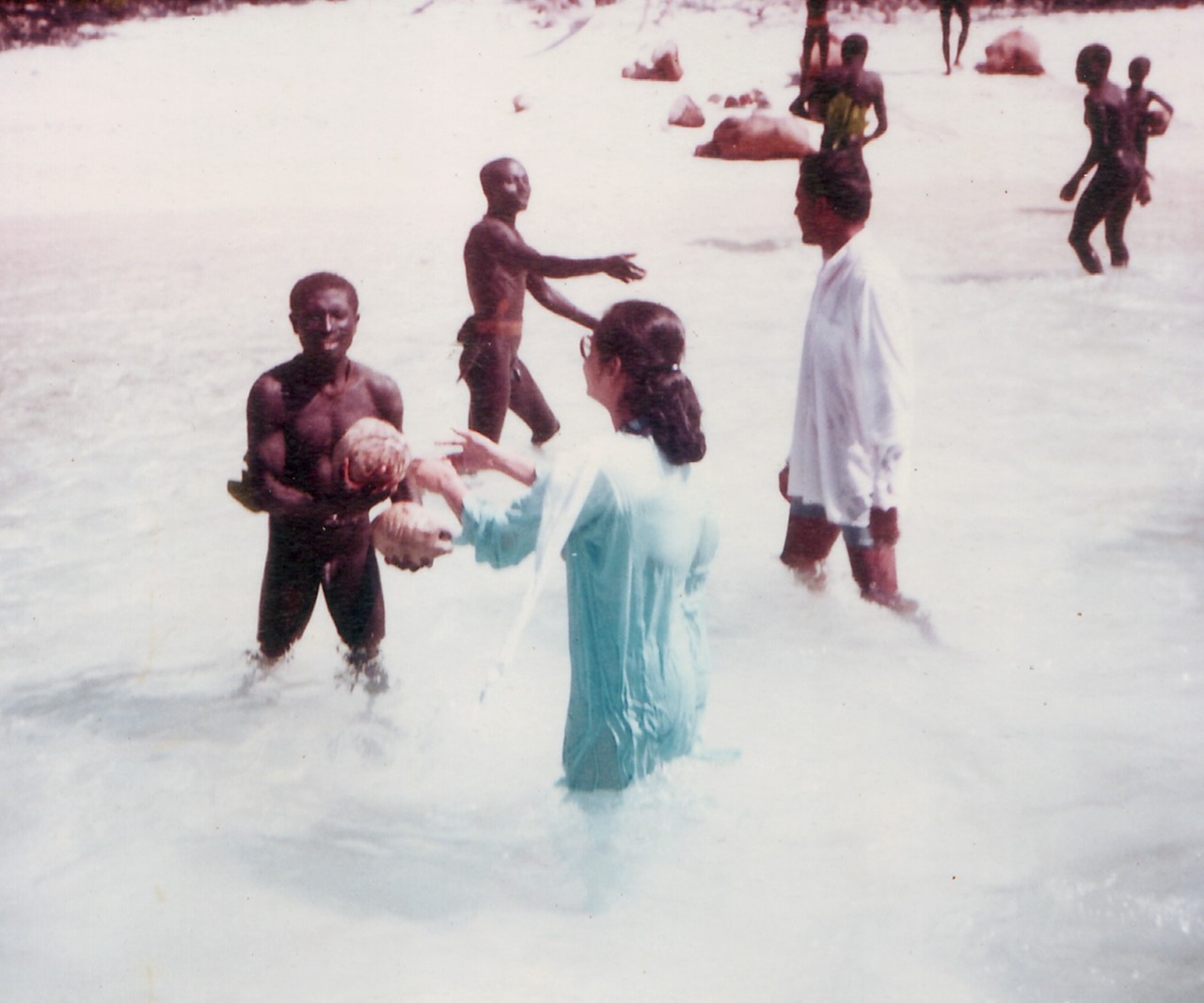
Sentinelese receive the coconuts being distributed and carry them from boat to shore
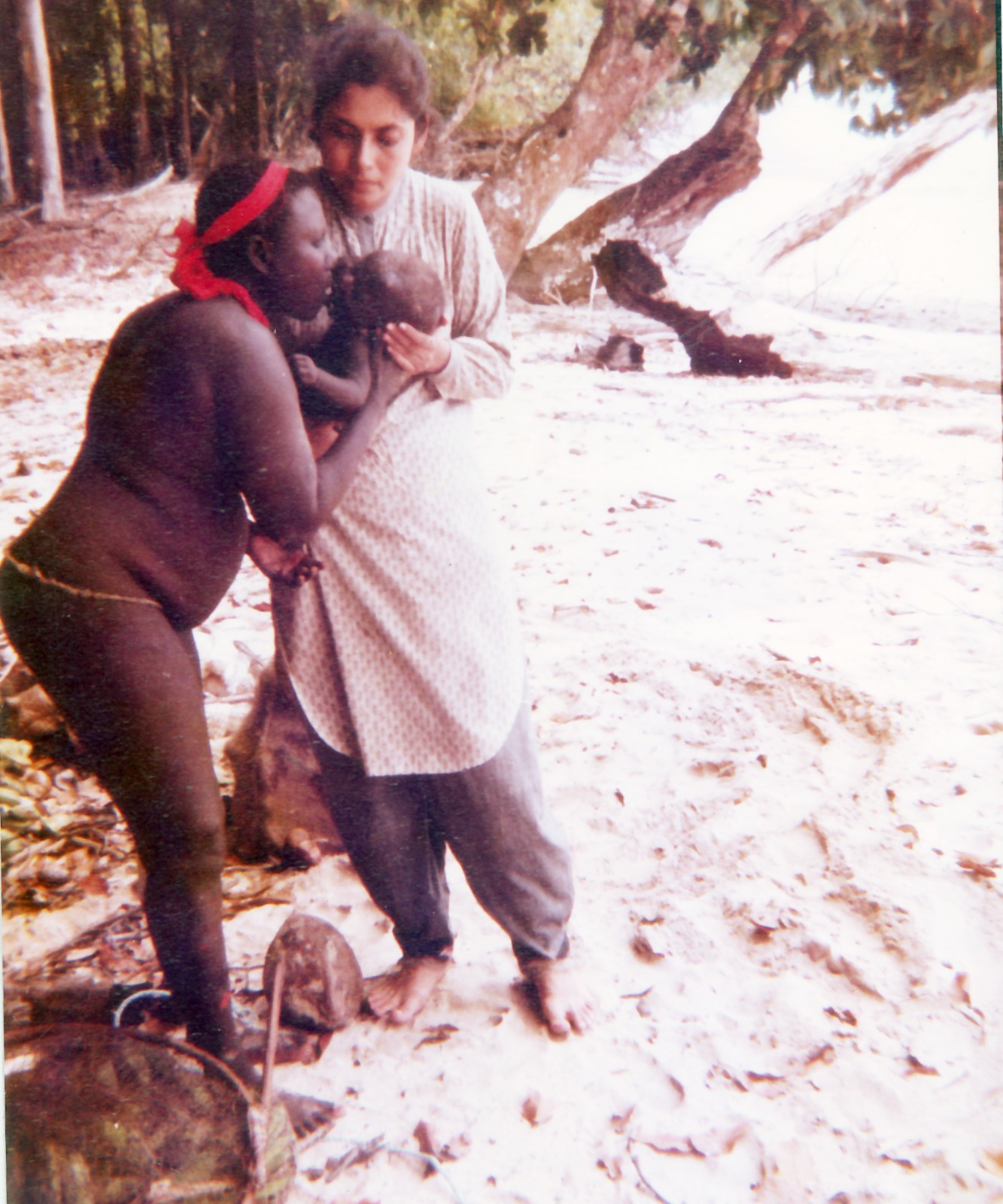
Madhumala documenting the unique mouth-to-mouth style in which Jarawa mothers feed their babies
She was again approached by the media in 2025 when members of the Jarawa community were enlisted as voters. Beyond such moments, however, there was little sustained public recognition of her scholarship.
Her career did not receive the visibility accorded to some celebrated field researchers.
Madhumala now lives in Delhi. Meeting her is a lesson in humility. She does not dwell on her own achievements. Conversations about her scientific work and the historic contact expeditions quickly turn to what she considers more important, the research questions, field observations and lived realities of the hunter-gatherer communities she studied.
About the author
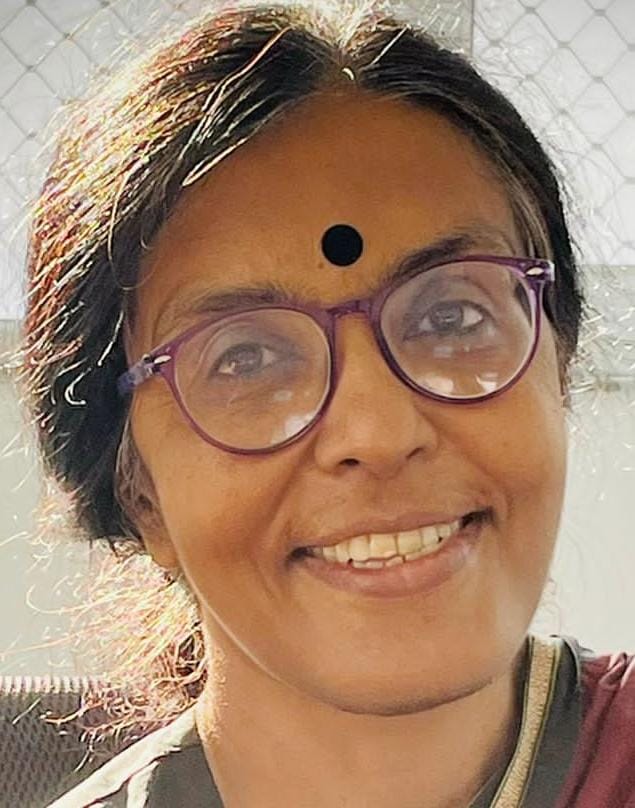
Jayanti Dutta is a Professor at Panjab University, Chandigarh and has been rooted in the academic ecosystem for over 25 years. With a PhD in Cytogenetics, her scientific journey began with a microscope but soon expanded to encompass training, mentoring, writing and public engagement in higher education. She takes pride in enabling educators to perform their roles more meaningfully. Her publications based on interdisciplinary exploration move between research, creative non-fiction, book criticism and science popularisation. She finds stories in classrooms, laboratories, public places and city corners, and tries to tell them with honesty and wonder.
Add a Comment