
Why marine conservation in India needs fishers, and consumers, on its side
From moonlit turtle patrols in Chennai to reshaping how India eats fish, marine conservationist Divya Karnad has built a people-first model of ocean stewardship.
By Puja Bhattacharjee
| Posted on February 12, 2026
On moonlit nights along Chennai’s quiet shoreline in the early 2000s, a group of college students would walk for miles, guided only by starlight, the otherwise calm punctuated by the waves crashing on the shore. They were searching for sea turtles arriving silently from the Bay of Bengal to bury their eggs in warm sand.
Among them was young zoology student Divya Karnad, who was then just beginning to understand how closely the fate of marine life is tied to the people who live by the sea.
Karnad spent long nights patrolling the beaches to follow nesting Olive Ridley turtles, watch them emerge silently from the surf, and protect their eggs.
The work demanded patience and vigilance, relocating eggs so they wouldn’t be taken by poachers or dogs, guarding hatcheries until tiny turtles burst through the sand.
With no transport available at night, volunteers often slept right on the beach, curled in sleeping bags under the open sky.
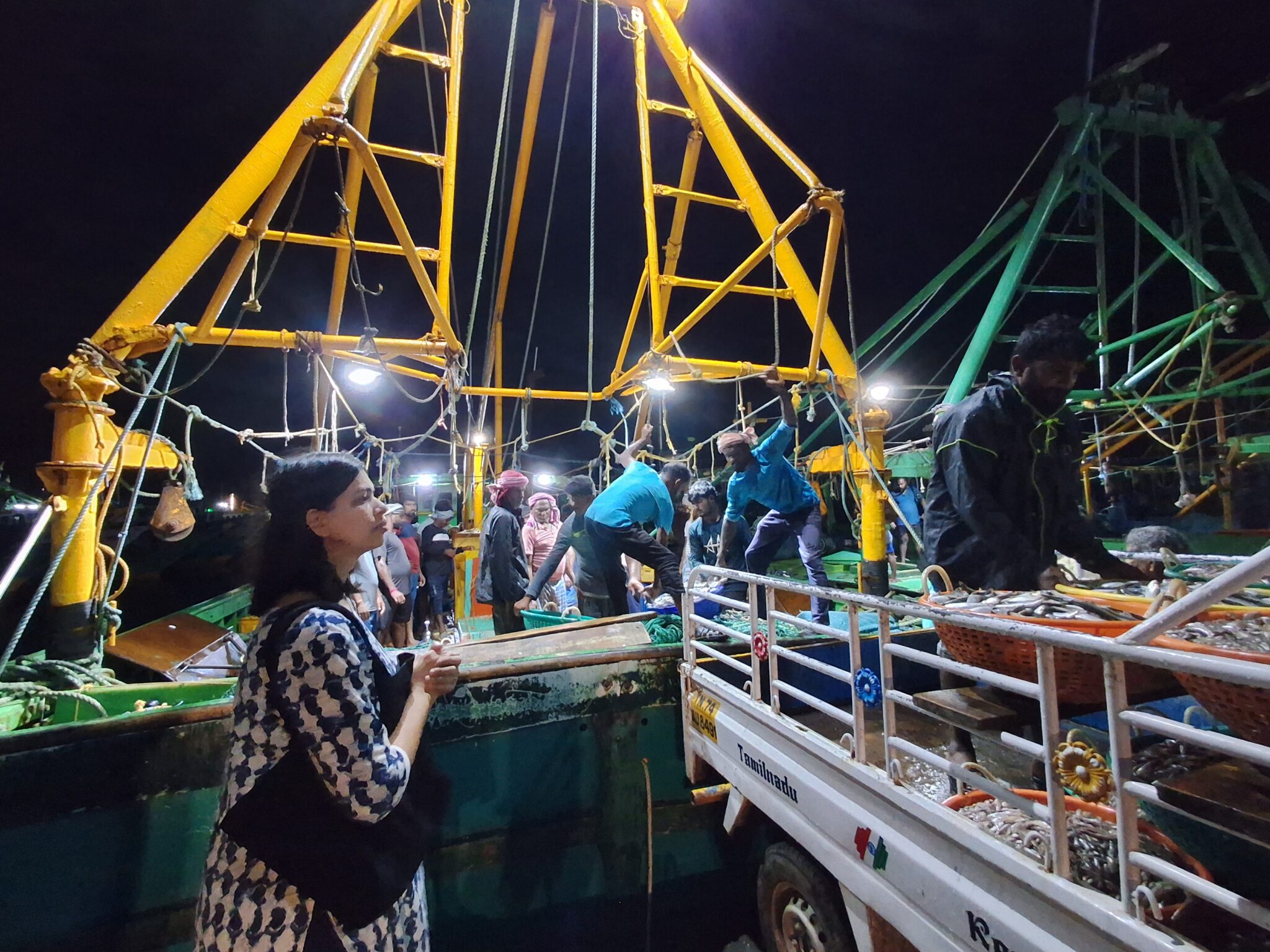
Divya, while recording her observations of fish landings at Chennai harbour
“It was basically just beach walks in the moonlight and stars, an amazing experience to sleep under the stars on the beach,” she said, remembering hearing “the little crabs trying to dig themselves out from under you.”
For her, then a zoology student at Women’s Christian College, these nights were an awakening, a rare space where young women could feel safe outdoors, immersed in nature and real-world conservation.
“I started managing to get quite a few girls from my college to come regularly,” she says, helping build a new community of women in field ecology.
Those formative hours by the sea planted the seeds for the scientist and marine conservationist she would become.
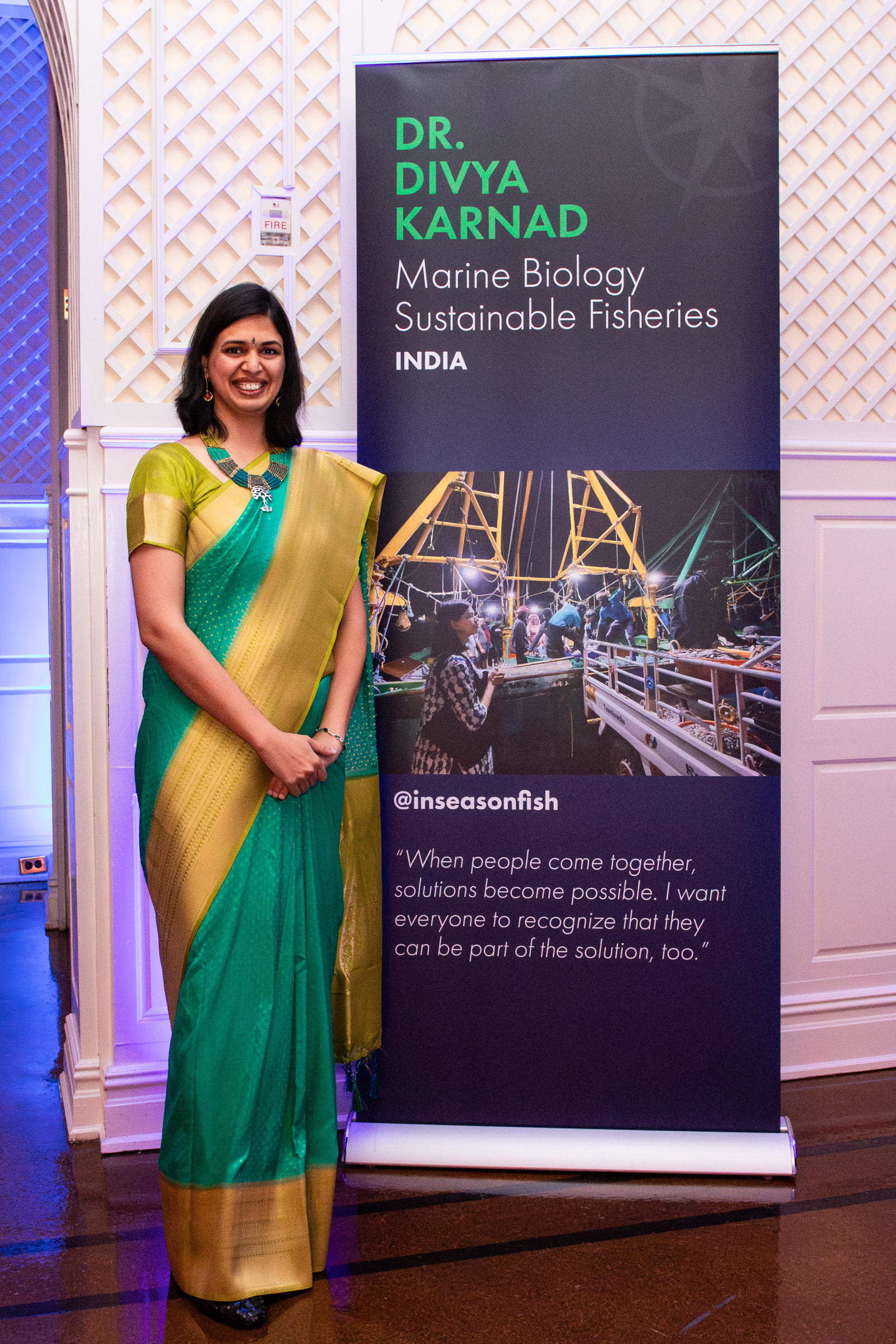
Today, Karnad is an Associate Professor of Environmental Studies at Ashoka University and co-founder of InSeason Fish, a sustainable seafood initiative transforming how India eats fish and how coastal communities fish.
But the seeds were sown on those beaches, in close proximity to nature and the people whose lives are woven into it.
From Chennai’s Coast to Wildlife Science
Karnad grew up in Chennai, where the ocean was never far away.
“Throughout my schooling and college, I was very sure I wanted to work with animals,” she says.
She planned to become a veterinarian, but life had other ideas. An allergy to animal fur and lower-than-expected entrance exam scores shut the door to veterinary medicine in 2002.
Instead, she entered a Zoology program at Women’s Christian College—an academic Plan B that became a turning point.
During college, she had the opportunity to explore various interests, which ultimately led her to Chennai’s burgeoning conservation community. Influenced by figures like filmmaker Shekar Dattatri and her volunteering at the Madras Crocodile Bank, she began to see a different path for herself. This experience introduced her to the Students’ Sea Turtle Conservation Network (SSTCN) and opened her eyes to real-world wildlife work—messy, unpredictable, and deeply human. The exposure to the Madras Crocodile Bank, Dattatri’s Nature Quest talks, and hands-on volunteer efforts shifted her focus from domestic animals to wildlife, and then to the ecosystems that sustain them.
“I realized this could be a career option as well. I could still get to work with animals even if I’m not a vet,” she says.
Her work with SSTCN gave her both confidence and a sense of purpose. There, she met mentors like Arun V., a schoolteacher who organized the volunteer activities for students and has been associated with the program for over 30 years. He significantly impacted her approach to things and the path she took, especially during her formative years.
“He was really influential at that key age,” she says.
When she wasn’t studying, Karnad was learning how turtles nest, how hatchlings survive, and crucially, how community involvement can determine conservation success.
This early exposure to grassroots conservation seeded the philosophy she carries today – wildlife research cannot succeed without people.
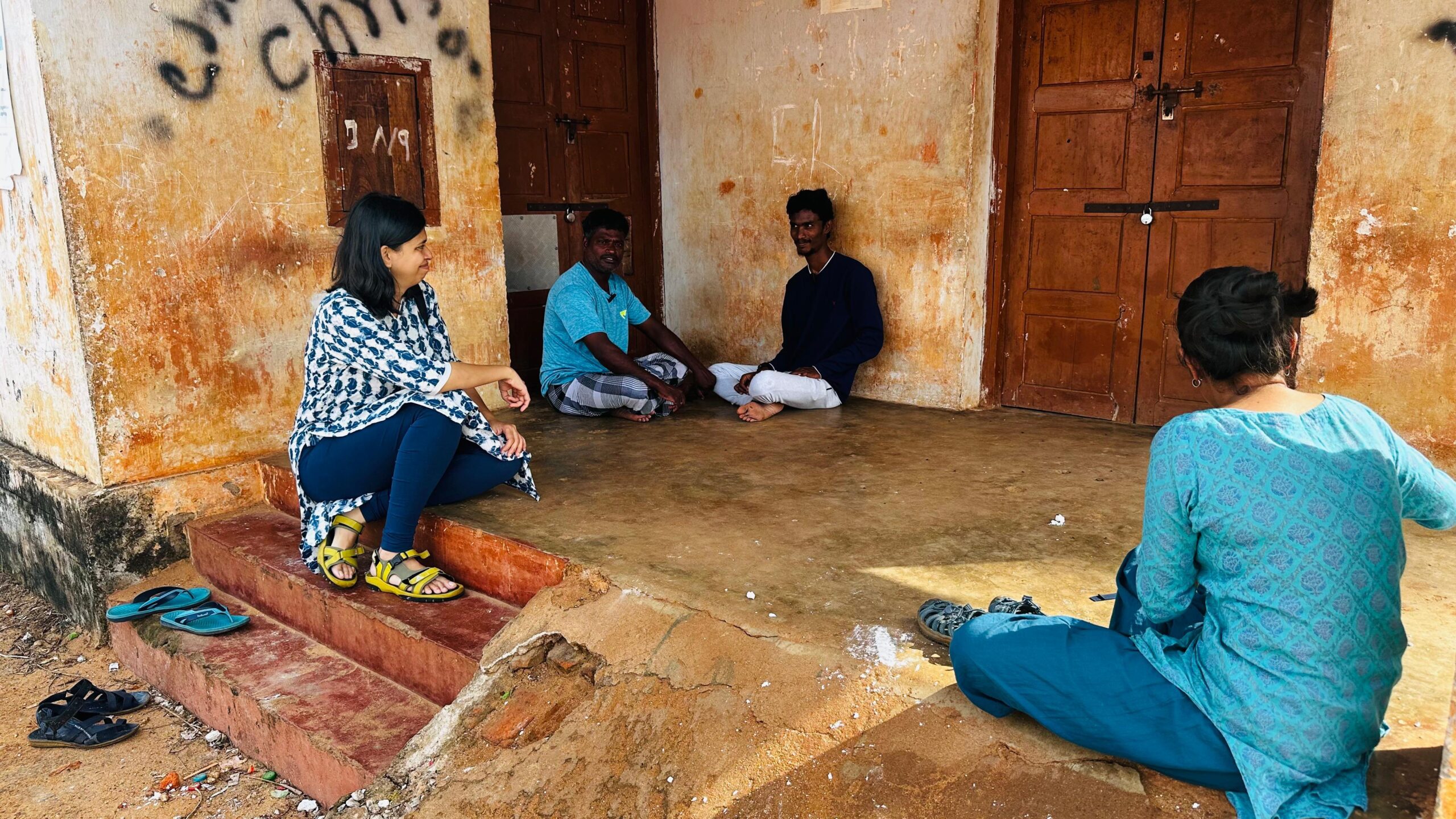
Divya and members of the InSeason Fish team in discussion with fishers in Tamil Nadu
Discovering the Human Side of Marine Conservation
After completing her master’s in Wildlife Biology at the National Center for Biological Sciences (NCBS) in 2006, Karnad traveled to Odisha to study sea turtle behavior for her thesis. Her scientific questions were classic ecology – how turtles respond to light pollution and temperature changes. But the experience reshaped her worldview.
Living among fishing communities, she realized science on paper rarely mirrors science in the real world. Safety concerns meant she relied heavily on local fishermen for field support. In the process, she witnessed how deeply their livelihoods were intertwined with marine ecosystems.
“It sort of changed my mind and made me realize that I have to look at the people and not only the animals,” she says.
When she later launched an independent project in Tamil Nadu and Maharashtra, supported by the Ravi Sankaran Fellowship, her goal was no longer just biological. She wanted to understand how fishing communities fished, adapted, and survived.
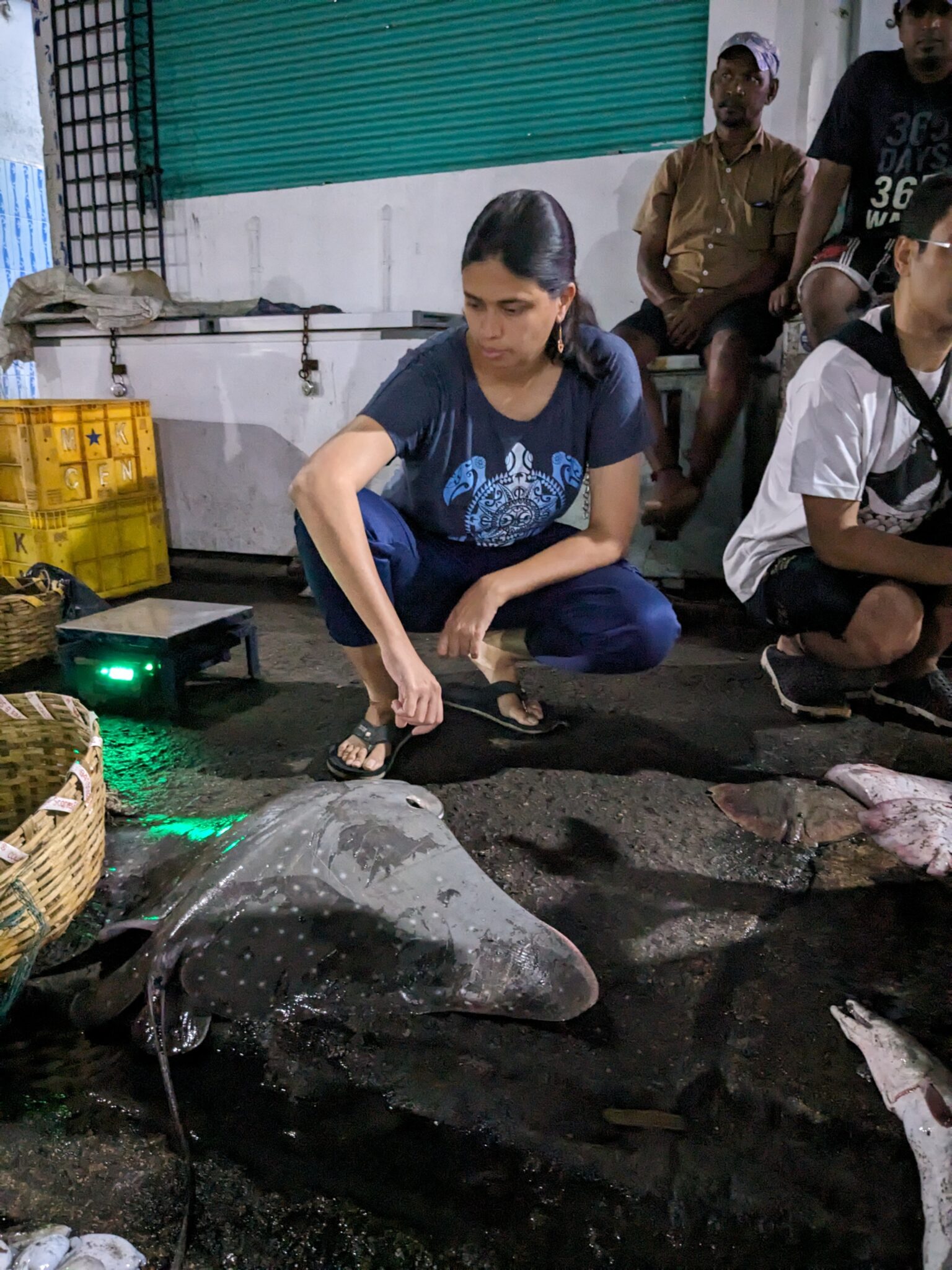
Divya in the harbour with an ocellated eagle ray
That fieldwork would become a revelation.
What she found in those coastal villages contrasted sharply with the dominant scientific narrative.
“What I was reading and what I was seeing in real life did not match. Literature was talking about greedy fishermen, but no one was talking about these long-term oriented people,” she says.
In these villages, fishers were inventing their own sustainability systems – limiting net soaking times, checking nets frequently to reduce bycatch, adjusting depth according to currents. These were not Western-imported conservation models; they were grassroots innovations rooted in lived experience.
Their methods were cheap, practical, and surprisingly effective.
“They could make the net much more selective and sustainable… just adjusting the way they were using the net.”
That contradiction led her to pursue a PhD in human geography at Rutgers University, unusual for a wildlife biologist, but essential for the kind of conservation she wanted to practice.
At Rutgers, she studied coastal communities in southern Maharashtra that practiced sustainability long before it became a buzzword. They weren’t driven by environmental ideology but by foresight. They wanted their oceans to support future generations.
The Market Problem
These fishermen caught diverse species—nearly 100 edible varieties—that their ecosystems naturally produced. But they faced a problem.
When Karnad mapped the fish that reached cities, she found only 10–15 species at most. A handful of commercially prized names like pomfret, seer, prawn, and squid dominated urban plates. Everything else, though edible and nutritious, stayed in coastal markets or was sold as pet food or fertilizer because of convenience and perceptions.
Karnad realized that restaurants were the key influencers for what people are eating in cities.
Once restaurants started serving various boneless fish, particularly after the introduction of Basa, they were able to provide boneless fillets. This change was well-received, as many patrons preferred it to dealing with bony fish, which often required additional effort to cut and clean.
With the availability of convenient fish products that were already processed and ready to cook, people began to favor this easier option that allowed them to simply take the fish out of the packet and place it in the pan.
The economic consequences were stark. Fishers earned less for diverse catches, so many increasingly targeted only high-value species, fueling overfishing. Sustainability wasn’t failing because fishers didn’t care, but because markets incentivized the wrong behavior.
The solution, she realized, was not just policy, but consumer preference. This insight became the seed for Karnad’s most ambitious project.
InSeason Fish
In 2016–17, Karnad co-founded InSeason Fish to shift consumer behavior, restaurant sourcing, and incentives for fishers. The idea was simple: Change how urban India consumes fish, and you can change how India fishes.
They initially considered Western-style sustainability certifications but quickly realized they wouldn’t work here.
“Indian consumers are not used to this certification thing, and they are not willing to pay more. People were asking, ‘What is sustainable fishing?’”
So they changed strategy. First, education and awareness, and then, direct market bridges.
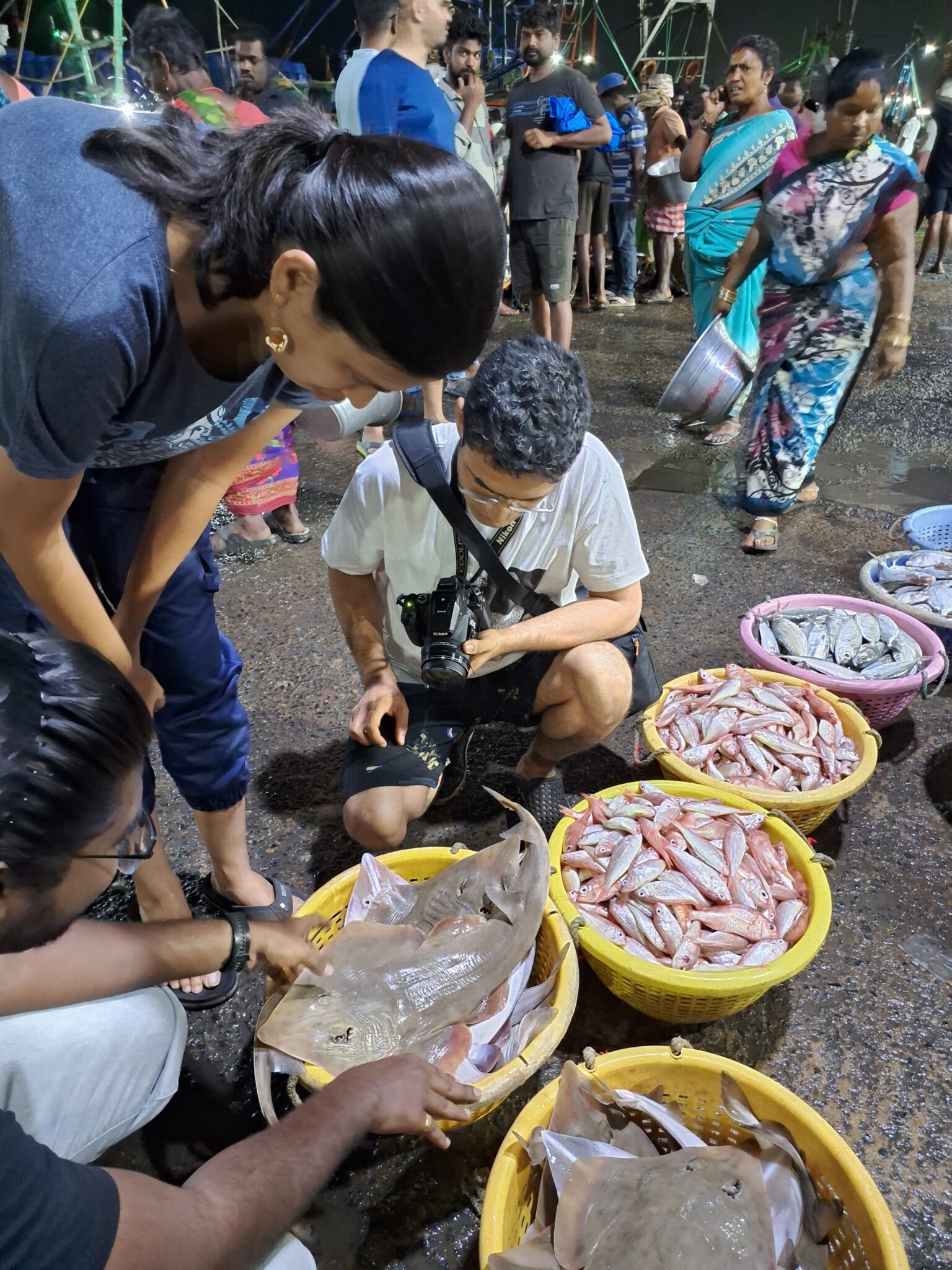
Divya and her team study elasmobranch (shark and ray) catches at the habour
InSeason Fish began building consumer awareness through social media, workshops, and a now-signature program called Fishploration, where urban seafood lovers join guided visits to fishing markets to learn about species diversity and sustainable practices firsthand.
These tours demystify the market and introduce consumers to small-scale fishers using low-impact methods.
Sudha Kottillil, a researcher on Karnad’s team, describes them as transformative learning experiences.
“We take seafood consumers to a small-scale fishing market, explain diversity, how to identify fish, how to identify fresh fish, and why small-scale fisheries are better,” she says.
They also connect chefs to coastal villages, helping bring forgotten species back onto menus. The movement has taken root, slowly but steadily.
The program isn’t just educational. It shifts emotional relationships to seafood, from anonymous supermarket fillets to knowing who caught your fish and how.
Even during the pandemic, when people avoided markets, InSeason Fish kept working with fishing communities to connect them to buyers and better rates.
“Earlier, we chased restaurants. Now restaurants come to us,” Karnad notes.
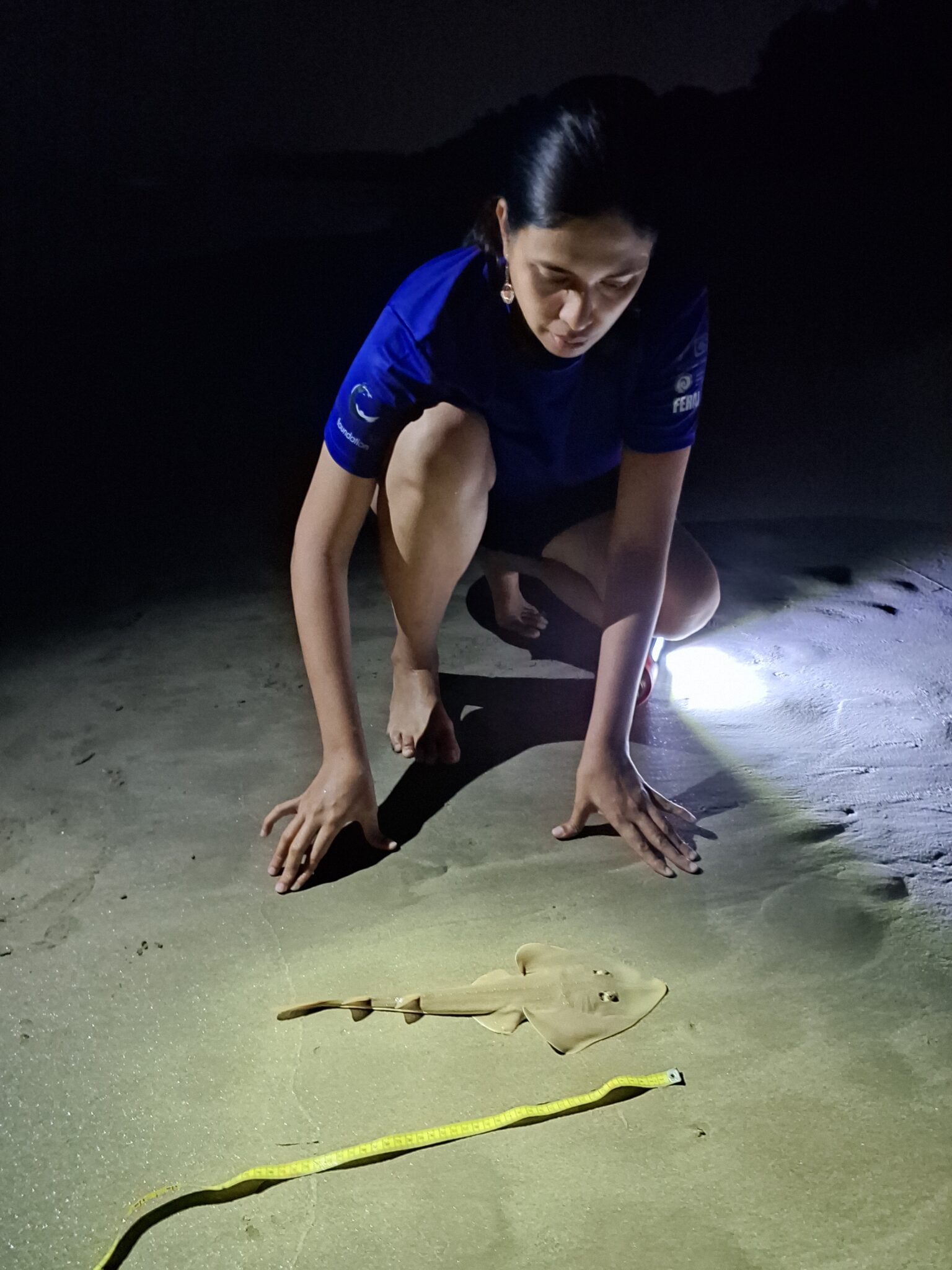
Data collection extends from the harbours to the beaches
Building Other Scientists
Beyond research and activism, Karnad is shaping the next generation. At Ashoka University, she blends academics and field science; in InSeason Fish, she trains young ecologists through real-world engagement.
Sudha describes her as both rigorous and nurturing.
“Divya has been really supportive, encouraging us to apply for grants and fellowships. She is very hands-on in helping write papers and refine research.”
Kottillil’s own milestones, including publishing papers and securing a project grant, she credits partly to Karnad’s mentorship.
Karnad herself knows how rare this pathway was. Her parents did not know anyone in wildlife research; she created her map while walking it. Today, she offers students a path she never had.
Navigating Academia, Fieldwork, and Motherhood
Fieldwork in remote coastal areas isn’t easy, especially for women. Karnad is candid about support systems being crucial.
“Having strong family support is crucial. It’s nearly impossible to manage having a family or children without a supportive home structure that can step in while I am away, traveling, or conducting research. Without that support, I really wouldn’t be where I am today,” she says.
Karnad urges young women not to self-limit.
“We are often restricted to comfort zones, but it’s not as bad out there as they make it seem. I have met 95% good people and 5% bad.”
Her experiences inform her advice to young women.
“Be bold. Step into the field. Reality teaches you more than books.”
A New Approach to Ocean Conservation
India has the world’s sixth-largest coastline, millions of fishing families, and a deep tradition of seafood consumption, yet its conservation focus has long centered on forests and charismatic land mammals.
Against this backdrop, Divya Karnad is quietly building a marine movement rooted in culture, community, and equity. By grounding science in lived experience, treating fishers as knowledge-holders rather than threats, and reshaping consumer habits instead of policing them, she has crafted an India-first model of ocean stewardship.
Her journey – from star-lit turtle walks to global research labs, to fish markets and coastal hamlets – underscores that conservation grows not in isolation but through dialogue between science and society, cities and coasts, past and future.
Her approach does not vilify fishers; it partners with them. It does not lecture consumers; it educates them. It does not import frameworks; it builds Indian ones.
In many ways, Karnad is a bridge between ecosystems and economies, between urban demand and coastal livelihoods, between tradition and emerging sustainability narratives. The ocean is changing, and so is India. Karnad stands at that intersection, not just observing but shaping what comes next.
About the author
Puja Bhattacharjee is an independent journalist based in Kolkata and writes about health, science, environment, gender, justice, rights, policy and culture.
Add a Comment