
Saving India’s vanishing wetlands, one marsh at a time
Dr Jayshree Vencatesan’s fieldcraft, people skills and persistence have protected ecosystems which were written off as wastelands.
By Saishya Duggal
| Posted on January 11, 2025
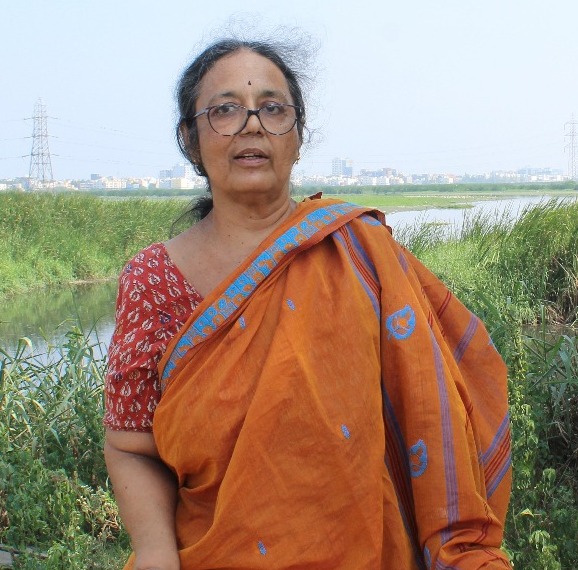
Dr Jayshree Vencatesan, one of India’s foremost wetland conservationists, never begins a study with satellite images or scientific jargon. She starts at the tea shop. For more than two decades, she has walked into these humid, battered stalls, listening to the men who linger there—the ones who remember when the marsh was fuller, greener, alive in ways it no longer is. Their recollections, gathered between sips of chai, have become her most reliable archive of ecological change.
It’s an unorthodox method, but one that has allowed Vencatesan to build an unmatched, ground-level understanding of India’s wetlands ecosystems that shelter hundreds of plant and animal species and are disappearing far faster than they can be restored.

Vencatesan receiving the Indira Gandhi Paryavaran Puraskar to honour her contributions to environmental conservation
Vencatesan has the soul of an artist. She grew up formally learning art at a local arts school, but topping the tenth grade meant science was the next step, as is often the case in India. She chose biology, and eventually ended up pursuing a PhD in biodiversity and biotechnology. It felt like a natural course: she had grown up in a peri-urban area in Andhra Pradesh, where the divisions between natural habitation and community had never been too stark. Her father’s familiarity with the local dogs, langurs and mongooses meant she quickly became chummy with animal life. And her flair for art required her to closely observe vegetation and then attempt to recreate it
While much of her BSc was spent learning the ropes of fieldwork, it was her Master’s programme that reinforced her interest in applied research and biodiversity. Her professor of Research Methodology, Prof Philomena R. Reddy, became both a role model and a catalyst. When she assigned a paper on what—and who—made for a great scientist, Vencatesan’s choice was unexpected: Leonardo da Vinci. She likened art and science to “two sides of the same coin”, both demanding rigour, precision and passion.
Despite being slightly nonconformist, her answer drew appreciation rather than dismissal. The professor valued her originality, inadvertently helping Vencatesan reconcile her dual passions.
Echoes of the marsh
This duality still tracks: science and art quietly converge when Vencatesan reads a wetland. It starts with the scientist’s careful inquiry: she circles the ecosystem again and again, gradually mastering everything within its five-kilometre radius. She laughs lightly and tells me, “It’s a bit like singing the children’s rhyme ‘Here we go round the mulberry bush’.” In doing so, she probes the ecosystem from all angles—its role for the community, water quality and contamination, its source, spread, linkages, barriers, catchment and outlets. She collects samples and stills, studies its plant and animal life, involves the Survey of India for tools like aerial photographs, and surveys the topography for quantitative and qualitative conclusions.
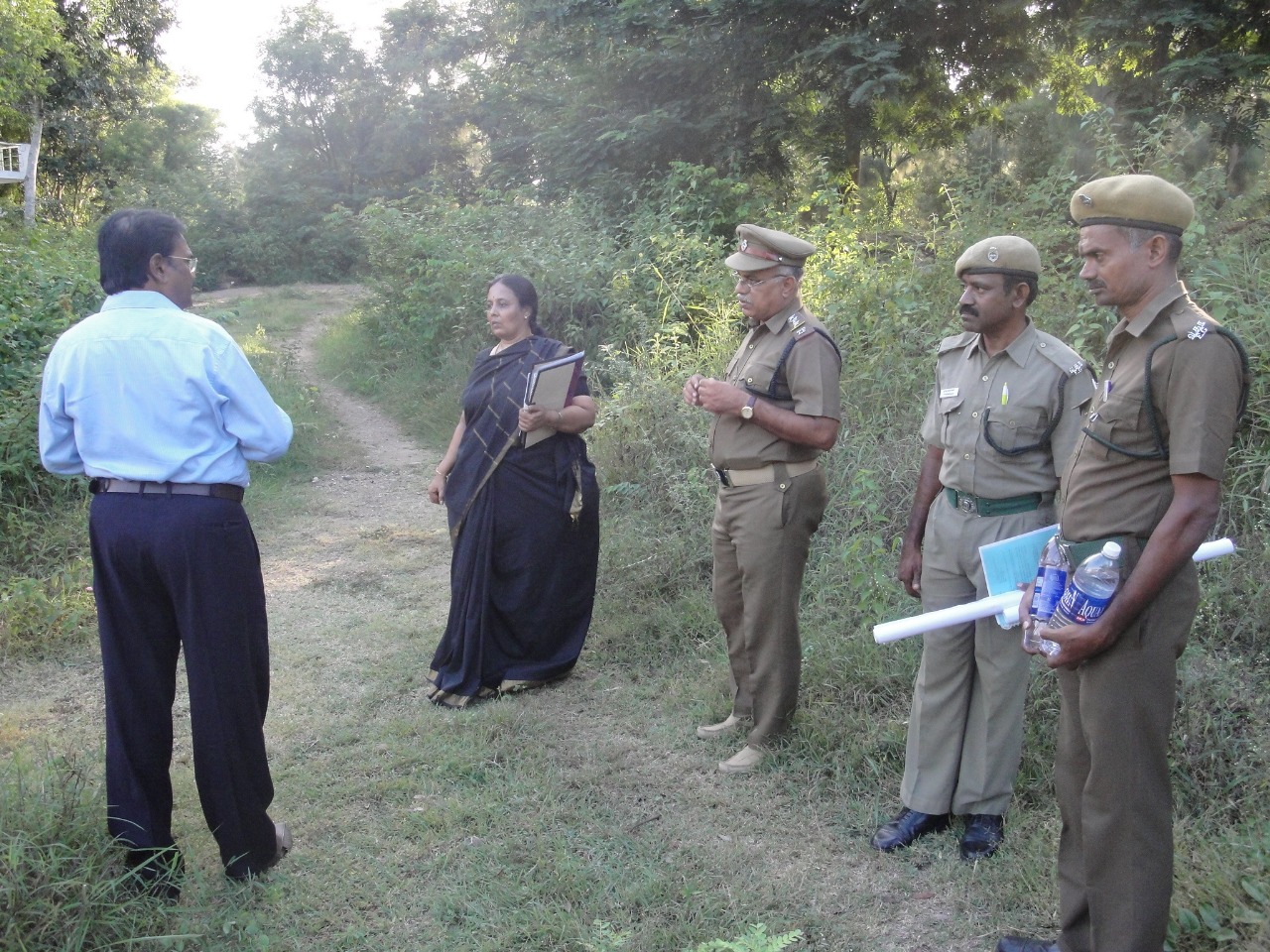
Vencatesan undertaking assessments in the forests of Salem, seen here with Forest Department officials
The art, however, lies in her people skills. She jokingly deems herself “garrulous,” but it’s truly what stands her in good stead. She hovers around the marsh till the mist clears… or doesn’t; it is imperative for her to obtain the insights of common folk, especially elders, who hold deep knowledge of the land, its historical use and its local significance. I’m convinced she has succeeded each time, because Vencatesan tells me she remains friends with people she interviewed decades ago; she sticks with them, asks about their sarees, quizzes them on where they had their blouse stitched, checks in on how the kids are—even now.
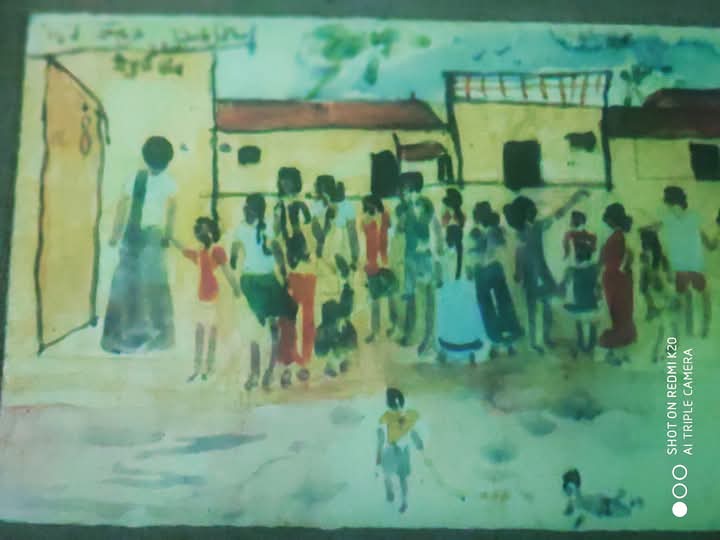
Vencatesan’s painting as a nine-year old child, which received a National award and was subsequently printed as greeting cards by Rotary
Once Vencatesan and her team’s assessments are finalised, it’s time to approach the bureaucracy. No matter how thorough the insights, she is received with scepticism and, most times, isn’t even granted the courtesy of a meeting. The process moves at a glacial pace, as is the case with most conservation work. “Conservation efforts don’t fruitify overnight; you have to be at it for years,” she says. Somehow, she doesn’t make it sound demoralising. “Most things in life take time—an artwork, good embroidery, one’s career, even raising kids,” she shrugs. “You simply need dogged determination.”
Vencatesan has the soul of an artist. She grew up formally learning art at a local arts school, but topping the tenth grade meant science was the next step, as is often the case in India. She chose biology, and eventually ended up pursuing a PhD in biodiversity and biotechnology. It felt like a natural course: she had grown up in a peri-urban area in Andhra Pradesh, where the divisions between natural habitation and community had never been too stark. Her father’s familiarity with the local dogs, langurs and mongooses meant she quickly became chummy with animal life. And her flair for art required her to closely observe vegetation and then attempt to recreate it.
So that’s what she does: waits it out for the right meeting, and once she has it, there is “no compromise on the science.” I may be on the receiving end of her life’s story, but they only get the data. Vencatesan makes a candid admission: “I realised early on that I don’t have many skills my colleagues do; I’m not very fit (anymore), I’m not articulate enough, and I don’t speak multiple languages. What I do have, and I use, is that I can be a persistent pain in the backside!”
It’s striking how this (ostensibly) simple sauce has enabled her to preserve even the Pallikaranai Marsh in Chennai, one of South India’s last surviving natural wetlands, which was previously adjudged a wasteland. Subsequently, the government undertook several conservation initiatives, including a comprehensive restoration plan and securing Ramsar designation for the marsh—thereby protecting its ecological functions and bringing it global attention. An ecosystem such as the Pallikaranai Marsh not only shelters abundant (and unique) flora and fauna but also contributes to flood mitigation in a city as vulnerable as Chennai.
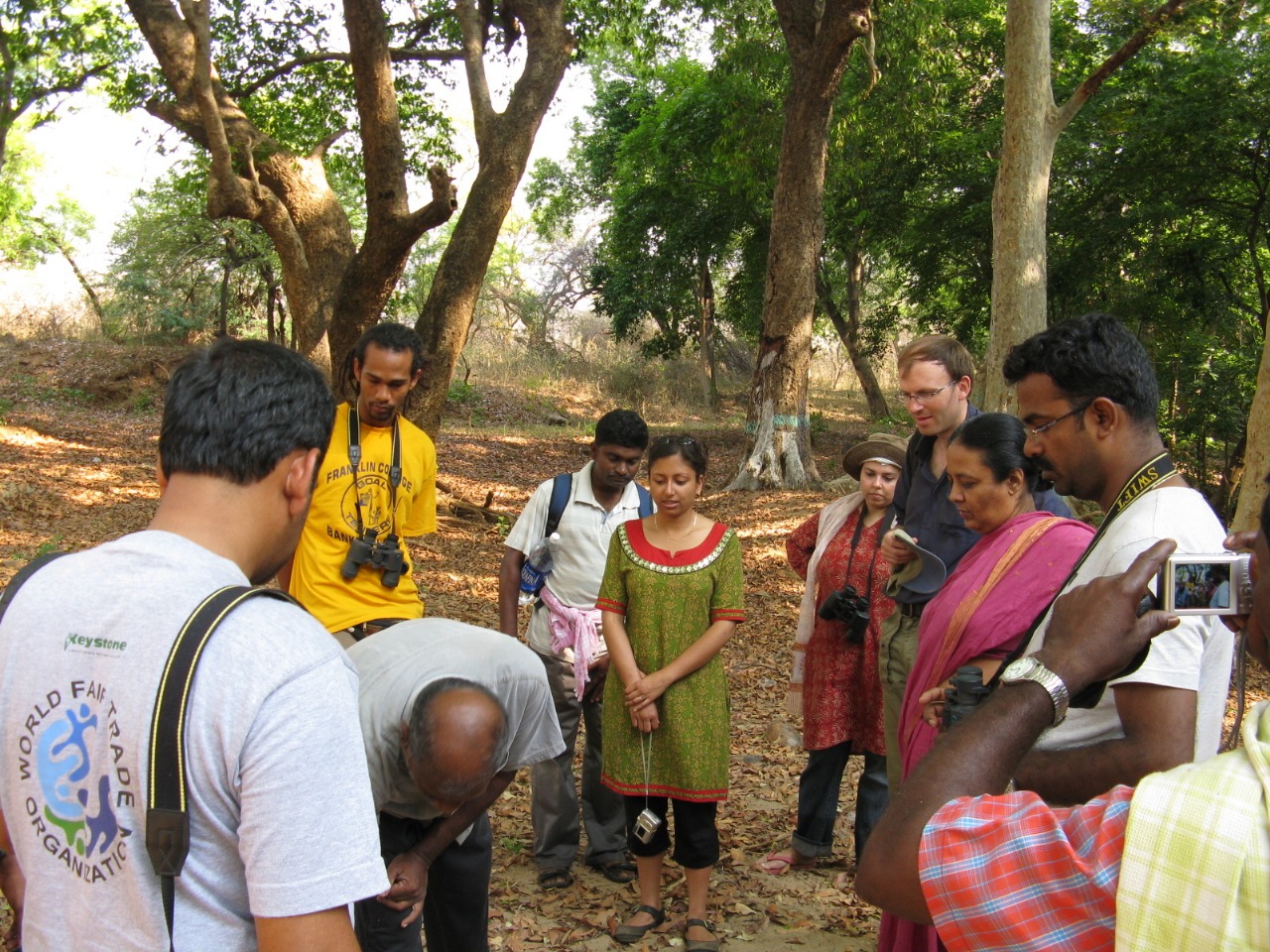
Engaged in assessing flood plains of River Moyar in the Western Ghats
Tides of change
For all its pragmatic and altruistic contributions to society, wetland conservation is a wade through murky waters (literally). “Funding is the biggest challenge, especially if you don’t toe the donor line,” Vencatesan remarks plainly, referring to her long-standing funding challenge as the Co-founder and Managing Trustee of the Care Earth Trust, a non-profit protecting biodiversity and protecting the eco-livelihood opportunities of communities residing near Vedanthangal and Karikili Bird Sanctuaries (who are among their work’s key stakeholders). No matter how many years she has poured into the business, no matter how many awards she has been bestowed with (and there are many, including being the first Indian to win Ramsar award for Wetland Wise Use!), Vencatesan continues to be forced to bear shots about her “aukaat” (standing) when money comes into question. Even when she had founded the Trust with her colleague, Dr. R.J. Ranjit Daniels in 2000, they faced lean days. The duo had just a “table, a computer, and a printer” ($350 at best), and faced a jarring dearth of projects. Incidentally, and perhaps serendipitously, Vencatesan’s newspaper article caught the attention of the UNDP office in India; their director took a chance on the duo, recruiting them for a study on inland wetlands in India alongside the Institute for Ocean Management. “I can’t really complain about funding much, considering we got into this field because we were — well, broke,” she quips; the woman really is pessimism-proof.
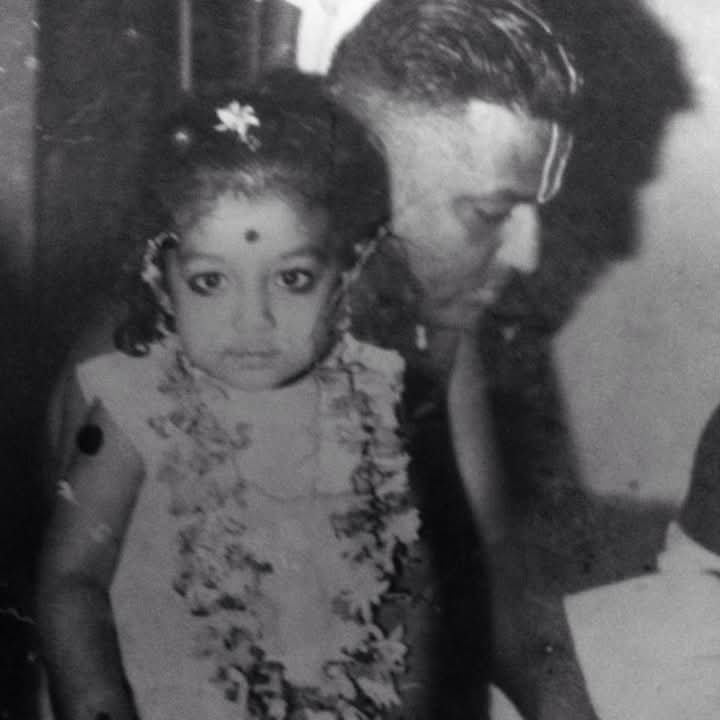
The only image Vencatesan has with her father, who inspired within her an early love for animals
Though the woman isn’t broke anymore, the system still remains broken. And because Vencatesan has (rightly) earned some goodwill within the fraternity, she’s pitching in to catalyse change. When she works with women now, she makes sure to organise child-caring facilities, because she was once a young mother in the field with little support to fall back on. Vencatesan had taken a break between her Masters and PhD to raise her kids, and knows not to exploit — or allow the exploitation of, mothers. She willingly tries to carve out more opportunities for women in this space; the documentation for India’s submission to Ramsar (on behalf of the Ministry of Environment, Forest and Climate Change) was done by an all-women team at Care Earth Trust. And even for passive participants, the Trust is making engagement equitable: this past-January, the trust organised an all-women nature walk for bird watching in the city. This is progress, because Vencatesan, like many other girls, was once only permitted field visits when they were within known parameters; she had offhandedly mused that perhaps, she wouldn’t have been allowed similar exposure if she’d been raised in a fully urban setting (than a peri-urban one, which itself became the field in many occasions).
New roots
Though the grit years of Vencatesan’s life are well behind her, her commitment to her mission is steadfast. I’m keen to learn why, after all these years, she keeps going—what inspires her to continue on this quest of wetland conservation. It’s a question she’s been asked over and over, but her response remains simple: if we keep looking at each other to get the job done, who will actually get the job done? It may have been happenstance that she ended up preserving wetlands, but she has racked up enough sweat equity to prove that passion can follow purpose (and not always the other way around).
So that’s how it is: Vencatesan shows up each day, her French bulldog, Messi Mayur Vencatesan, hanging by her side, whom she lovingly calls her “companion, collaborator, and most times, co-conspirator.”
India is home to over a thousand wetlands and over 600 million women. I’m glad to report that, in her chatty, diligent and seasoned ways, Vencatesan is making the country a better place for both. The marshes may be old, but the roots are new.
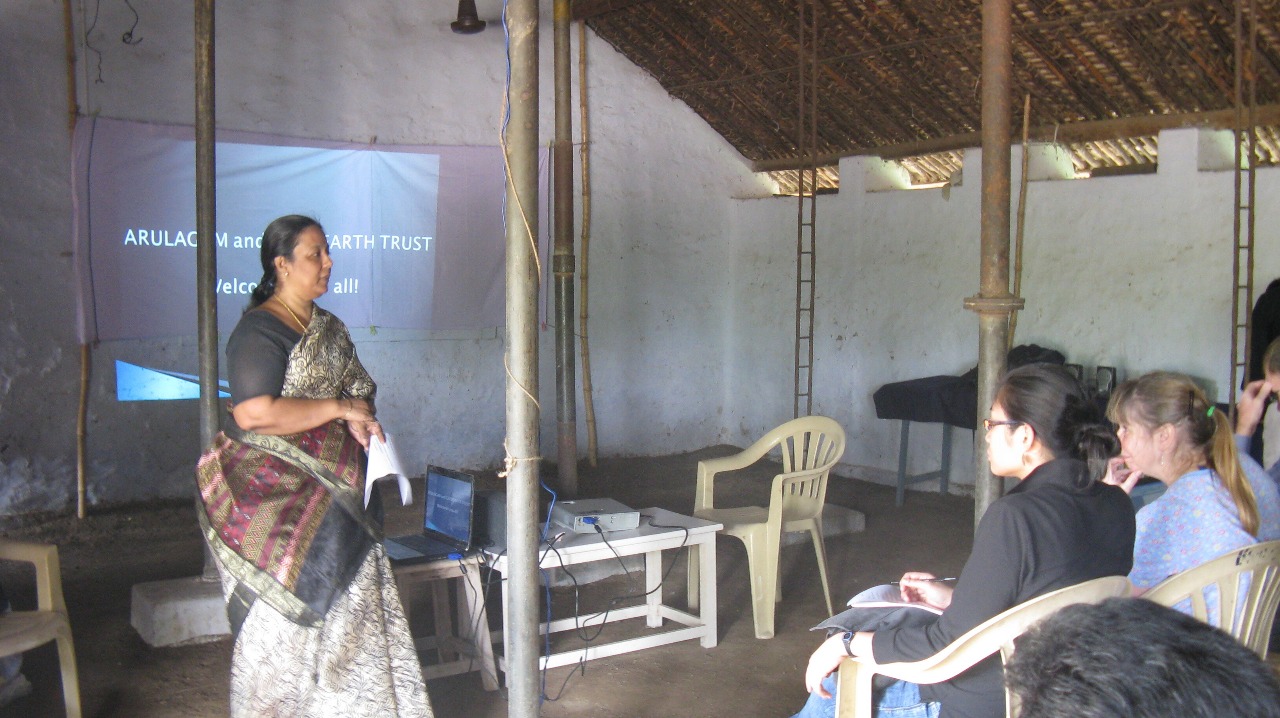
Delivering a lecture at an organic farm in Sathyamangalam, working alongside the World Bank, Conservation International and other NGOs
About the author
Saishya Duggal is a public policy and impact consulting professional working at the intersection of tech, finance, and climate policy. She has undertaken projects with the UP Govt., the World Bank group, and Indian NBFCs. A graduate of Delhi University, her work emphasises the value of STEM in policy and its implementation. Her previous professional stints include those with Invest India and Ericsson.
Add a Comment