
Meet the women teaching STEM in the backwaters
In under-resourced colleges across India, women educators sustain scientific temper, mentor first-generation learners, and navigate constraints with ingenuity.
By Jayanti Dutta
| Posted on May 6, 2026
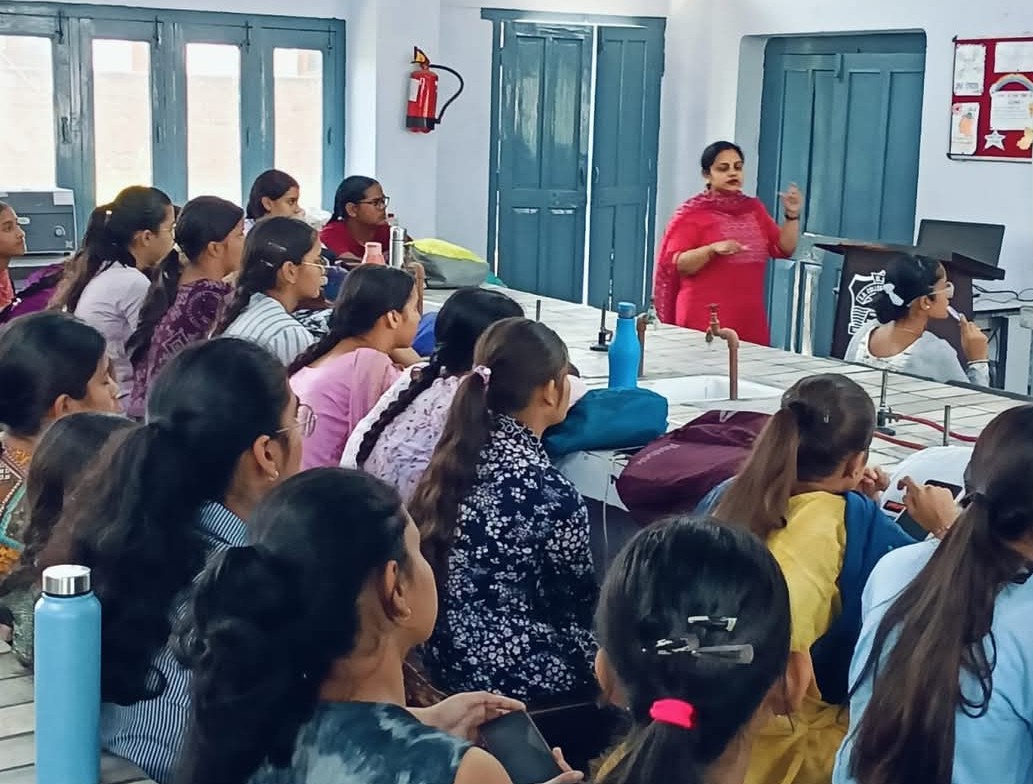
In the national imagination, science education is often associated with gleaming laboratories, cutting-edge research, and elite institutions where ideas flourish in an atmosphere of intellectual abundance. Yet, far removed from these islands of privilege, there exists another, far larger landscape of science education, unfolding in modest classrooms, under-resourced laboratories, and socially complex terrains. It is here, in the backwaters of India’s educational geography, that a remarkable cohort of women quietly sustains the promise of STEM.
These women in small-town and rural colleges are not merely disseminators of knowledge; they are role models, mentors, career counsellors, mental-health saviours, and even family dispute arbiters, and they are stoically mentoring new generations into science education with not much help from the other stakeholders.
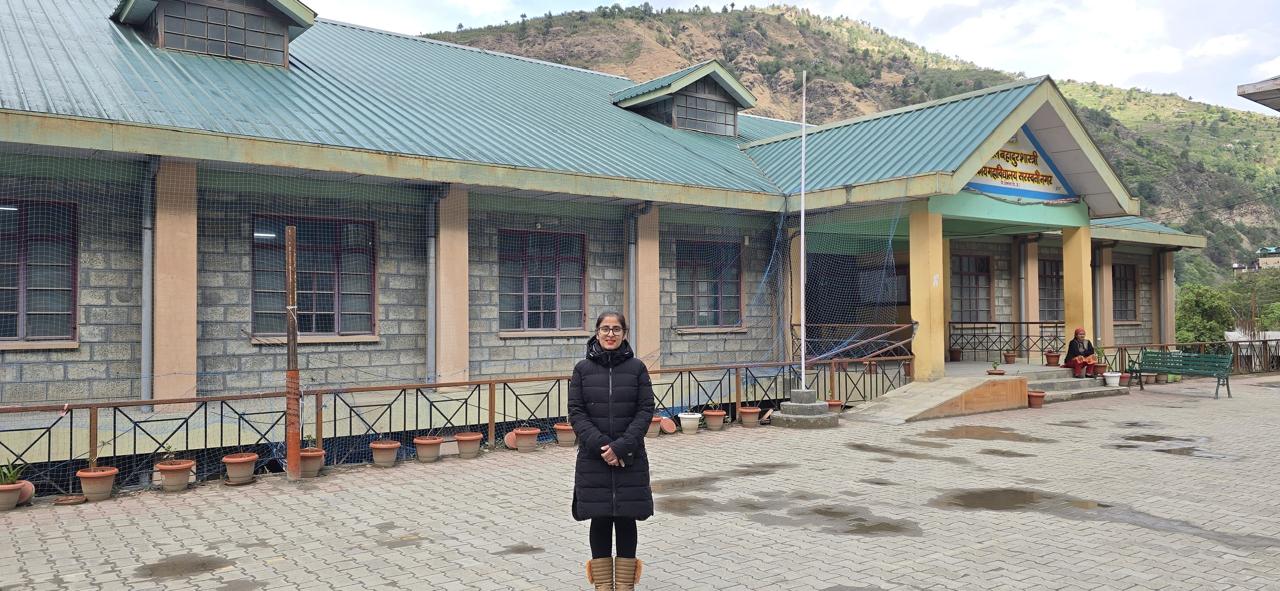
Dr Shallu Dogra teaches in the remote reaches of Hatkoti, Himachal Pradesh
Teaching despite constraints
Dr Shallu Dogra teaches Chemistry at Lal Bahadur Shastri Govt Degree College, Hatkoti, Himachal Pradesh, a place a hundred kilometres away from Shimla, located deep in the apple-growing belt, in a valley on the bank of the river Pabbar. With well-qualified teachers and affiliation with the state university, the college is not a non-descript institute. However, its remote location and barely adequate government funds make it difficult to create a vibrant ecosystem of rigorous science teaching and research. It is difficult to persuade scientists and other resource persons to visit the college for lectures or take students on trips to national labs for experiential learning.
However, these are no deterrents for Dr Dogra, who had her research training in Panjab University, Chandigarh.
Her vibrant experience of academic ambience and intellectual rigour has made her determined to design similar experiences for her students too in this college. Through creativity and resourcefulness, she has converted her chemistry lab into a training site for students to learn to prepare apple cider and vinegar, conducted workshops on responsible eating through literacy on packaged food labels, and made students participate in surveys on menstrual hygiene practices in a community where taboos are deep-rooted, she says. Her strategy to compensate for the resource deprivation is high-quality teaching.
She hardly teaches from textbooks, emphasising the practicality and simplicity of scientific concepts. “It is important to think and I provoke them a lot,” she said.
Teaching and practising resilience
Many of these teachers are themselves first-generation learners, daughters of constrained households, survivors of systemic inequities, and often, the first women in their families to pursue higher education in science. Their journeys into STEM are rarely linear. They are marked by resilience rather than access and determination rather than privilege.
Dr Ruchika Sharma, teaching Botany in Govt PG College, Rajouri, is one such personality. Rajouri is located on a small, beautiful plateau in the village of Kheora, three and a half kilometres from Rajouri town, in the backdrop of snow-capped Pir-Panjal mountains in the North and the Darhal Tawi flowing in the west.
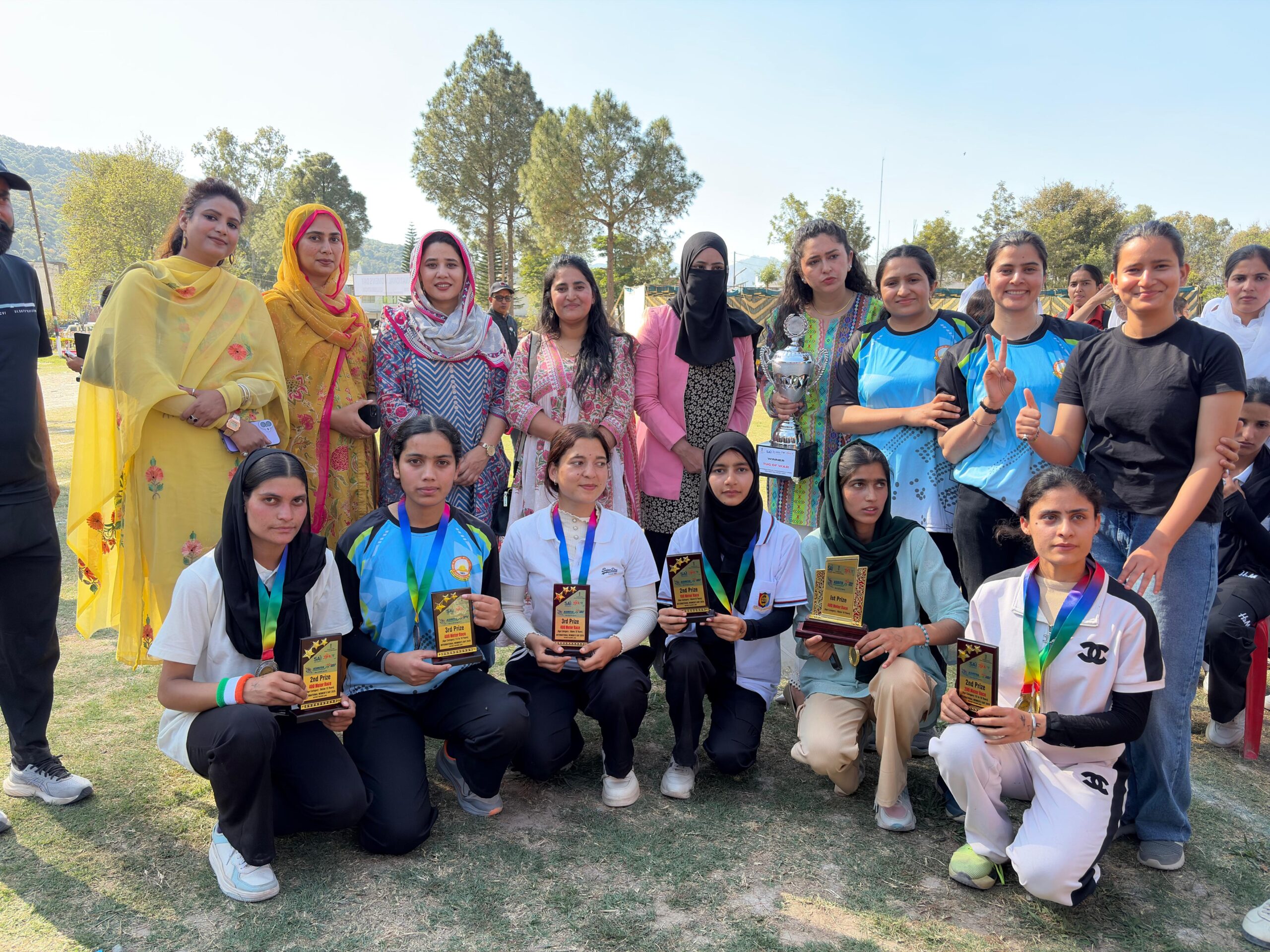
Dr Ayushi Thakur (4th from left) with her students on Women’s Day
Dr Sharma always wanted to study science because the questions “why” and “how” always intrigued her, and science was surely the answer. Challenges were also there as she came from a remote village, Bajabain, about 30 kilometres from the Line of Control in Rajouri district of Jammu. Lack of facilities was a real issue; however, her parents motivated her and supported her to the best of their capacity to provide a good education to Ruchika.
For her post-graduate and PhD research, she joined HNB Garhwal University in Uttarakhand, undertaking a journey of 18 hours one way, 850 km away from home, “not at all an easy journey but surely worth it”.
For her colleagues, Dr Ayushi Thakur, teaching Geology, and Dr Suhasani, teaching Veterinary Technology and Zoology, both coming from urban backgrounds, getting their first posting at a rural college with scarce facilities was a challenge**, which** they have surmounted with resilience.
All three young teachers acknowledge that they love to teach science to the girl students, who are bogged down by retrogressive societal norms but are hard-working and aspirational.
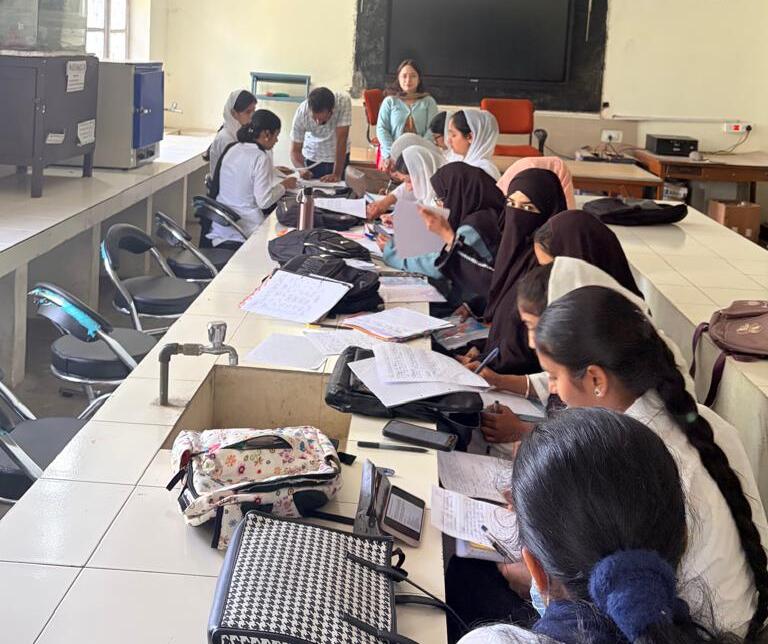
Dr Suhasani administering practicals in her lab in Govt PG college, Rajouri, where she teaches Veterinary Technology and Zoology
An intro to social realities
Ratia in Haryana is the town where Dr Richa Rani teaches physics in Khalsa Tri-shatabdi Govt College, to a cohort of students coming from a rural-agrarian community with a strong presence of historically marginalised groups and rigid caste structures. Ratia represents a typical semi-rural North Indian higher education ecosystem: young, diverse, socially stratified, moderately literate, and deeply shaped by local socio-cultural realities and limited access to higher education, especially for women.
Having done her PhD from Kurukshetra University, Kurukshetra, and with the continuous support from a progressive family, Dr Rani has now made peace with the fact that sans access to research journals, lab equipment, or any basic support for research facilities, physics research is not on her plate anymore.
However, teaching in Ratia needs much more than subject expertise. Girl students are not allowed to stay in college hostels, and they must travel back to their homes by evening, thus losing precious time that they could have spent studying in the hostel. Class attendance is low as students coming from agricultural backgrounds need to attend to the demands of their fields and farms, and poor students undertake part-time jobs, while girl students get married off mid-education, and the teacher needs to continuously nudge, coax, and force students to at least attend classes. Education is not a priority here; realities of life take precedence.
Access versus barriers
Dr Kriti teaches Botany in DAV College, Bathinda, Punjab, not a remote or rural area geographically. It is a well-connected city with all the trappings of a modern urban space, but its semi-urban agrarian society with high social diversity, moderate literacy, and strong rural influence shapes a distinct profile of higher education learners.
There is a gender imbalance in the sex ratio, and economic constraints still prevail in a population with 25% Scheduled Caste communities. Gender, caste, and religion shape social confidence and participation. Historically, education has not been a mobility pathway in the region. Migration to greener pastures in Canada and Australia is.
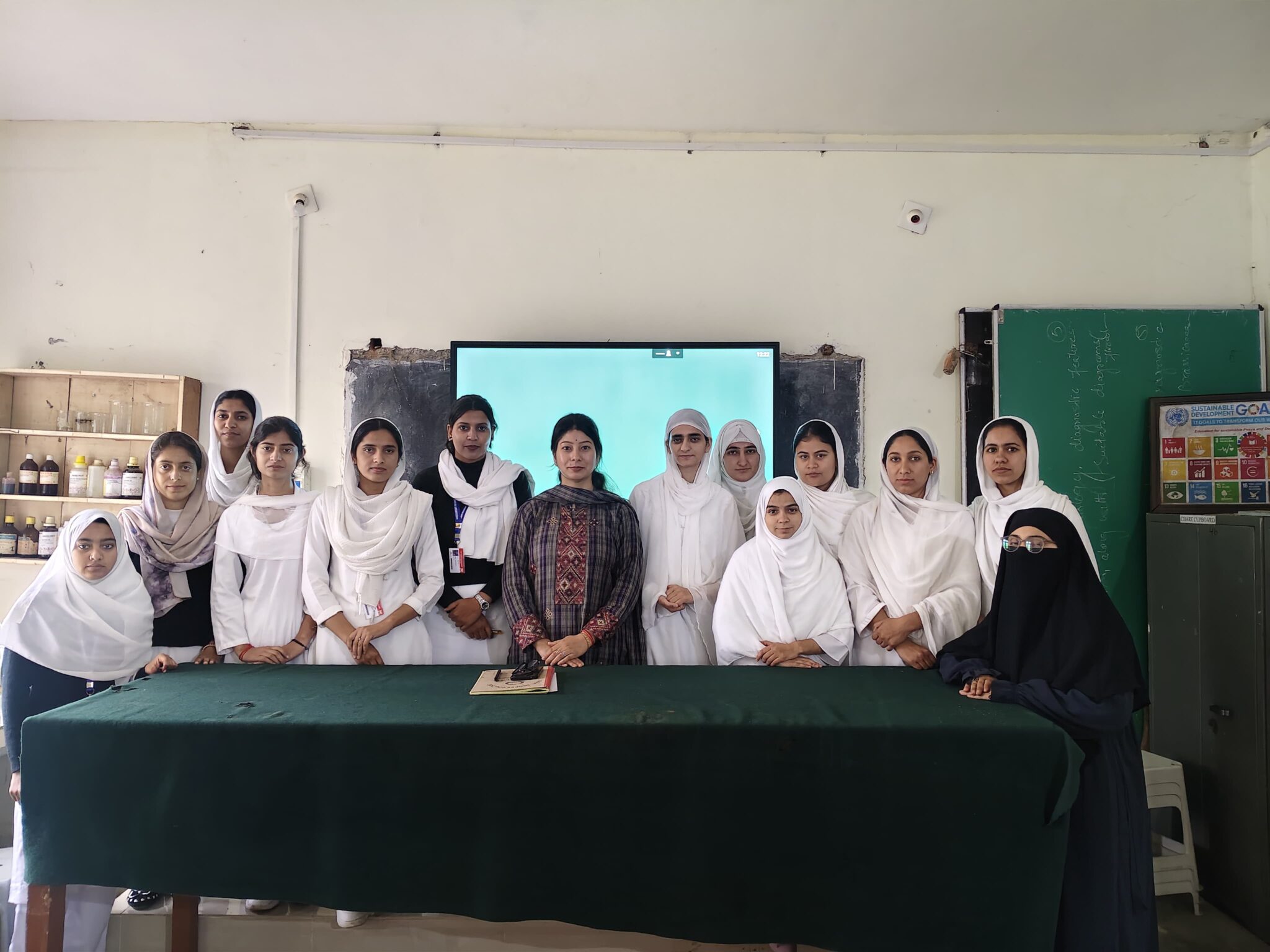
Dr Ruchika and her students at the Govt PG College in Rajouri
All these factors make science teaching in Bathinda quite challenging. ‘It is quite a task to teach science to these students, they don’t know the basic fundamentals and come to the college without the threshold knowledge and competency required for an undergraduate degree. Their motivation is low. With conservative societal constraints**, how can they learn problem-solving, clear thinking, and decision-making?’ Dr Kriti asks.
Novel ways need to be devised. She has started an interdisciplinary course in Nursery and Gardening, teaching how to grow dragon fruits and strawberries, which has become a hit among students. “Now that PR in Canada and Australia has closed, we are getting more students, and maybe, some better ones too,” she hoped.
Pursuing change
The pattern emerging from these stories from four states of North India emerges clearly. These women stand at the front of classrooms in colleges located in geographically remote and socially underserved regions. Their work environments are far removed from the idealised spaces of science learning. Laboratories may lack basic equipment, libraries may be outdated, and administrative support is often minimal, yet they persist; they don’t give up.
Their relationship with their work is complex. There is pride, deep and genuine, in being a science teacher. There is also frustration. They hold doctoral degrees, yet find themselves cut off from research ecosystems. Over time, this stagnation can erode academic enthusiasm. And yet, their commitment to teaching remains remarkably intact.
The brighter side of this narrative lies in the relationships these teachers build with their students. For many young women, a female STEM teacher is more than an instructor; she is a possibility. She embodies an alternative life trajectory, one where education leads to autonomy, where thinking is encouraged, and where questioning is not punished.
Do these teachers succeed in instilling curiosity, scientific temper, and a research mindset? The answer is not uniform, but it is hopeful. Not every student is transformed. Not every classroom becomes a site of intellectual awakening. But enough do.
Women teaching STEM in the backwaters is a story of quiet endurance and incremental change, which is neither dramatic nor headline-grabbing, but it is foundational. In classrooms that may never be photographed, in colleges that rarely make it to rankings, these women are shaping scientific temper, one student at a time. And in doing so, they are expanding the boundaries of what science education in India can mean.
About the author
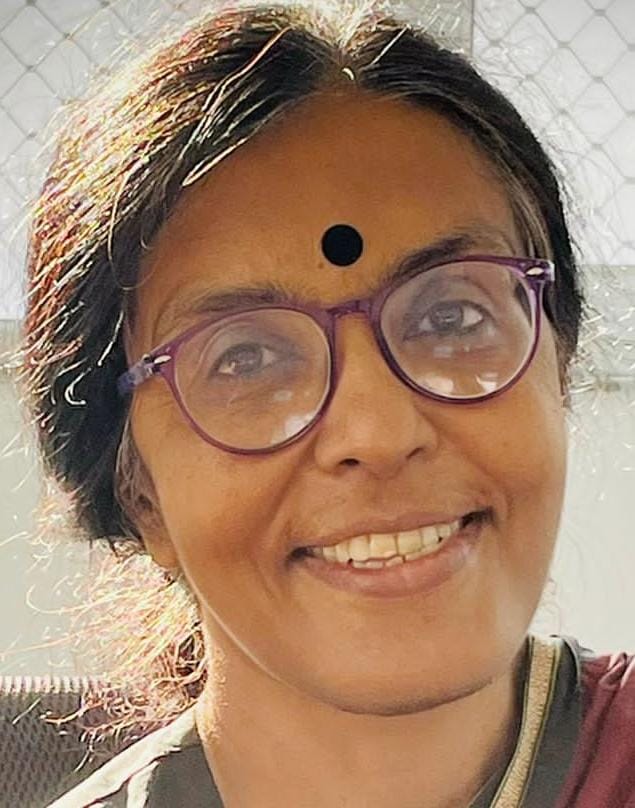
Jayanti Dutta is a Professor at Panjab University, Chandigarh and has been rooted in the academic ecosystem for over 25 years. With a PhD in Cytogenetics, her scientific journey began with a microscope but soon expanded to encompass training, mentoring, writing and public engagement in higher education. She takes pride in enabling educators to perform their roles more meaningfully. Her publications based on interdisciplinary exploration move between research, creative non-fiction, book criticism and science popularisation. She finds stories in classrooms, laboratories, public places and city corners, and tries to tell them with honesty and wonder.
Add a Comment