
How rural women are reshaping who gets to do science in India
From forests and farms to climate adaptation, women in rural communities are generating knowledge, testing solutions and influencing scientific research
By Puja Bhattacharjee
| Posted on September 8, 2026
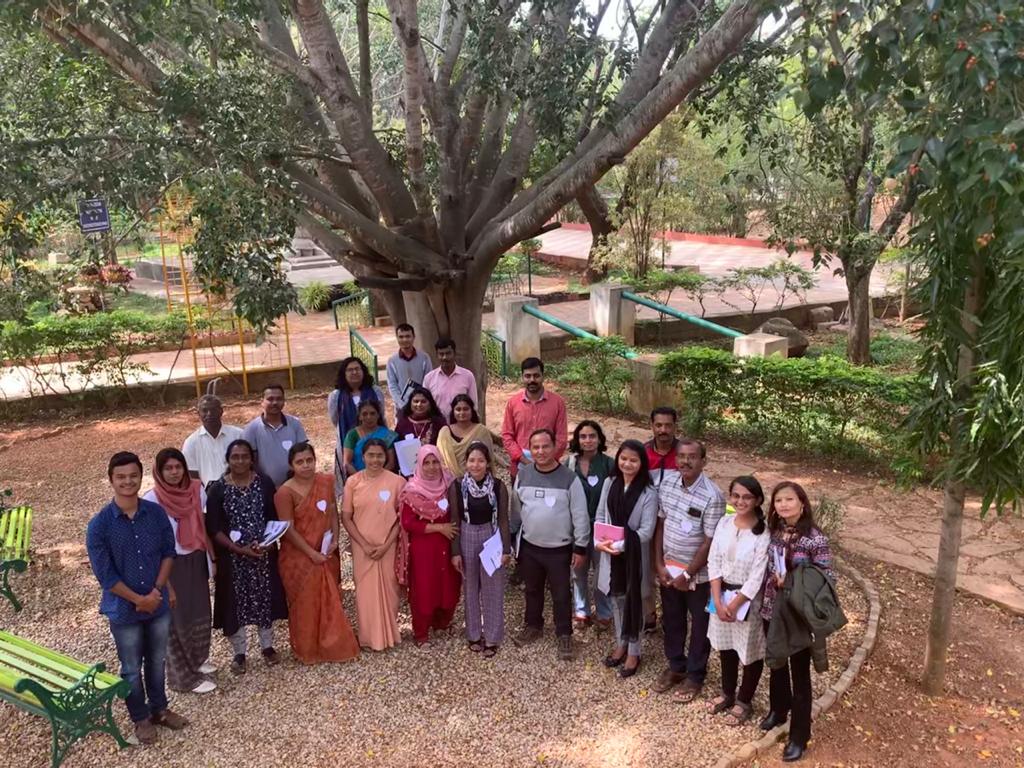
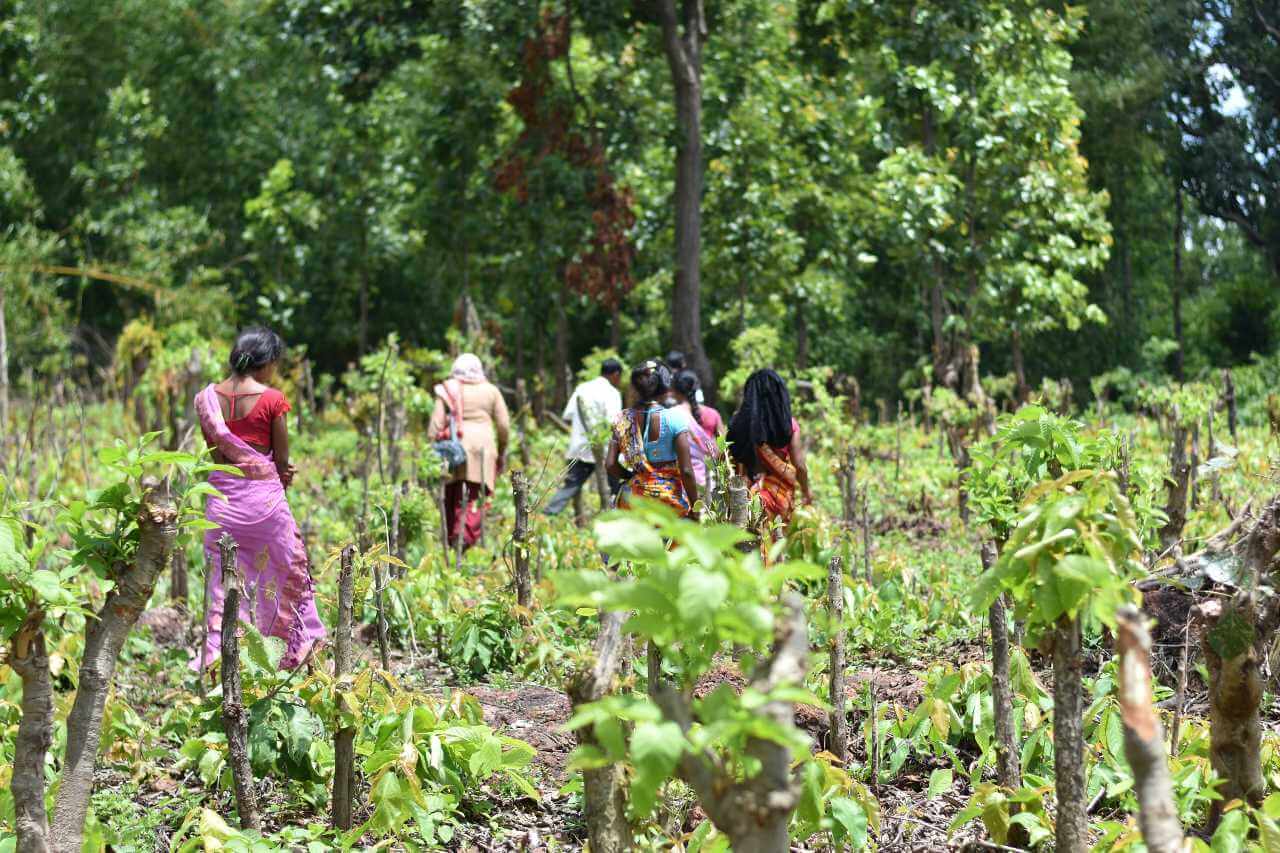
Every week, pairs of women leave their villages within the Nilgiri Biosphere Reserve carrying notebooks, pens and mobile phones. Their route winds through farms bordering the Mudumalai and Sathyamangalam Tiger Reserves, where cultivated fields merge with forests.
To an outsider, it may look like an ordinary walk through farmland. Instead, it is fieldwork.
The women are part of Keystone Foundation’s Barefoot Ecology programme, which trains Indigenous and local women to observe, document and interpret ecological change across the Nilgiri Biosphere Reserve, spread across Tamil Nadu, Karnataka and Kerala. Working around farming, childcare and household responsibilities, they spend one day each week monitoring landscapes they have known all their lives.
Each team pairs an elder recognised for her ecological knowledge with a younger woman comfortable using smartphones and digital documentation, bringing together generations of observation with contemporary tools.
They pause beneath fruit trees to ask questions. Has flowering begun earlier? Are there fewer fruits than last season? Which birds arrived first? Did elephants visit the fields last night? What uncultivated greens emerged after the first rains? Is the soil retaining less moisture? Have farmers changed crops because of climate or wildlife?
Most observations are written in notebooks because internet connectivity is unreliable. Photographs, videos, pH strips, moisture meters and pocket microscopes supplement the records. Once a month, the women meet researchers and fellow villagers to compare observations, validate findings and translate them into seasonal calendars and visualisations that inform discussions with forest officials on wildlife conflict, farming and conservation.
Few people would instinctively call these women scientists. That hesitation lies at the heart of a larger question.
Science has long been imagined as something that happens primarily in universities and laboratories. Scientists formulate questions, communities provide data, and discoveries flow back in the form of policies or technologies.
Across India, however, that relationship is beginning to shift.
From forests and farms to classrooms and climate adaptation programmes, rural women are not merely participating in scientific projects — they are helping decide what science should investigate in the first place.
For Bhavya George, Programme Coordinator for Climate Change at Keystone Foundation, that shift began with a simple realisation.
Conventional citizen-science projects typically start with researchers deciding what to study before inviting volunteers to collect data. Keystone reversed that process.
Instead of arriving with checklists of species or measurements, facilitators asked communities what they were already noticing. Those observations became the research agenda. Women spoke about fruit trees flowering differently, peacocks causing unexpected crop damage, uncultivated edible plants appearing at different times of the year and declining soil quality linked to shrinking cattle populations and changing farming practices.
The process begins not in a laboratory but in a village meeting.
Community members nominate women known for their ecological knowledge, while Keystone identifies younger women who can document observations using smartphones. The pairing is deliberate: one contributes decades of lived experience; the other helps preserve and organise it.
For George, working alongside Indigenous communities transformed her own understanding of science.
“The mainstream narrative has always been very formal,” she says.
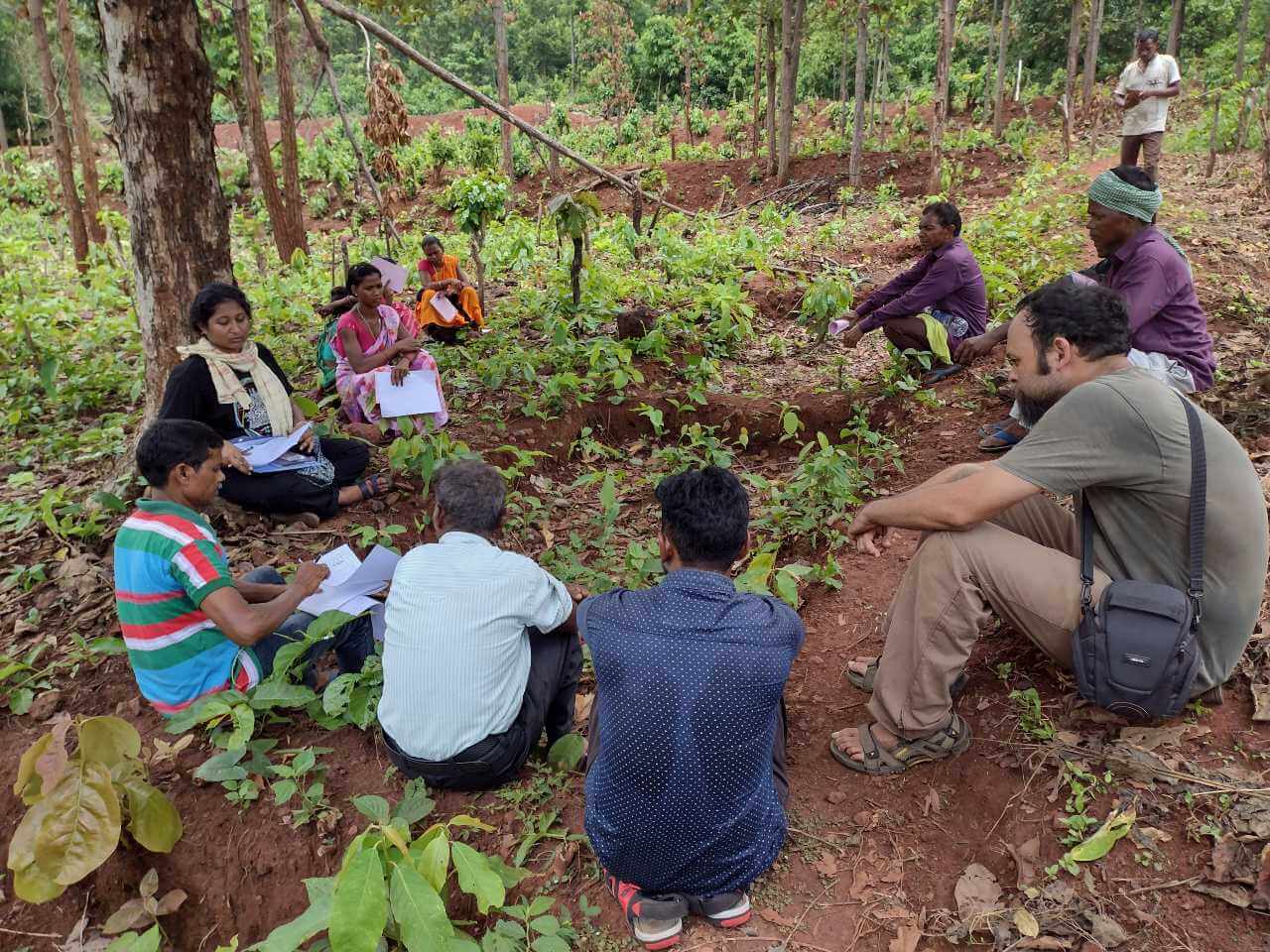
Scientific knowledge, she argues, is usually recognised only when it comes through universities or research institutions. Yet communities have spent generations observing ecological change, testing those observations against experience and adapting accordingly. Their language may differ from scientific journals, but the underlying process is remarkably similar.
The difference is not merely philosophical.
The women’s observations are also being used in local decision-making, discussions with forest departments over wildlife management and conservation initiatives, including analogue forestry and climate education. Some participants go on to become nursery managers, climate educators and community trainers, carrying their scientific practice into new forms of environmental stewardship.
Fields are planted with diverse combinations of millets, pulses, oilseeds and spices, reducing the risk that a single crop failure will wipe out household food supplies. Rather than depending on commercial hybrids, many women save locally adapted seed varieties that have evolved under the region’s harsh conditions.
Even seed storage reflects generations of experimentation: baskets lined with ash, neem leaves and mud mixed with cow dung preserve seeds for months without synthetic chemicals.
Climate change has made those practices even more valuable. After unusually heavy rains followed by prolonged dry spells destroyed first sowings in many villages, DDS farmers relied on household seed stores and community seed banks to sow again with shorter-duration varieties. Their resilience, in this case, came not from a technological breakthrough but from decades of conserving biodiversity.
At the same time, DDS has embraced contemporary science where it serves local needs. Recognising that fewer households now keep livestock — and therefore produce less farmyard manure — the organisation has established bio-resource centres where microbial cultures are developed and tested locally.
Some women have even created enterprises producing microbial inputs and plant-based formulations for neighbouring farmers, evaluating their effectiveness under local conditions while generating livelihoods.
For Veluguri, the important question is not whether technology has been validated elsewhere.
It is whether it works here.
“There are plenty of scientific journals that talk about the efficacy of Trichoderma,” says Veluguri. “But the scientific inquiry that happens here is: does it work in our conditions? Does it work for my ecosystem? Can I produce it in a low-cost manner?”
Learning to see science
Science, however, is not only about producing knowledge. It is also about learning how to see it.
Before children participating in SeasonWatch learn to identify flowering trees or upload observations onto a citizen-science platform, they are asked to draw a simple map of their journey from home to school.
The first sketches usually contain roads, bus stops, shops and houses. A year later, the drawings look very different.
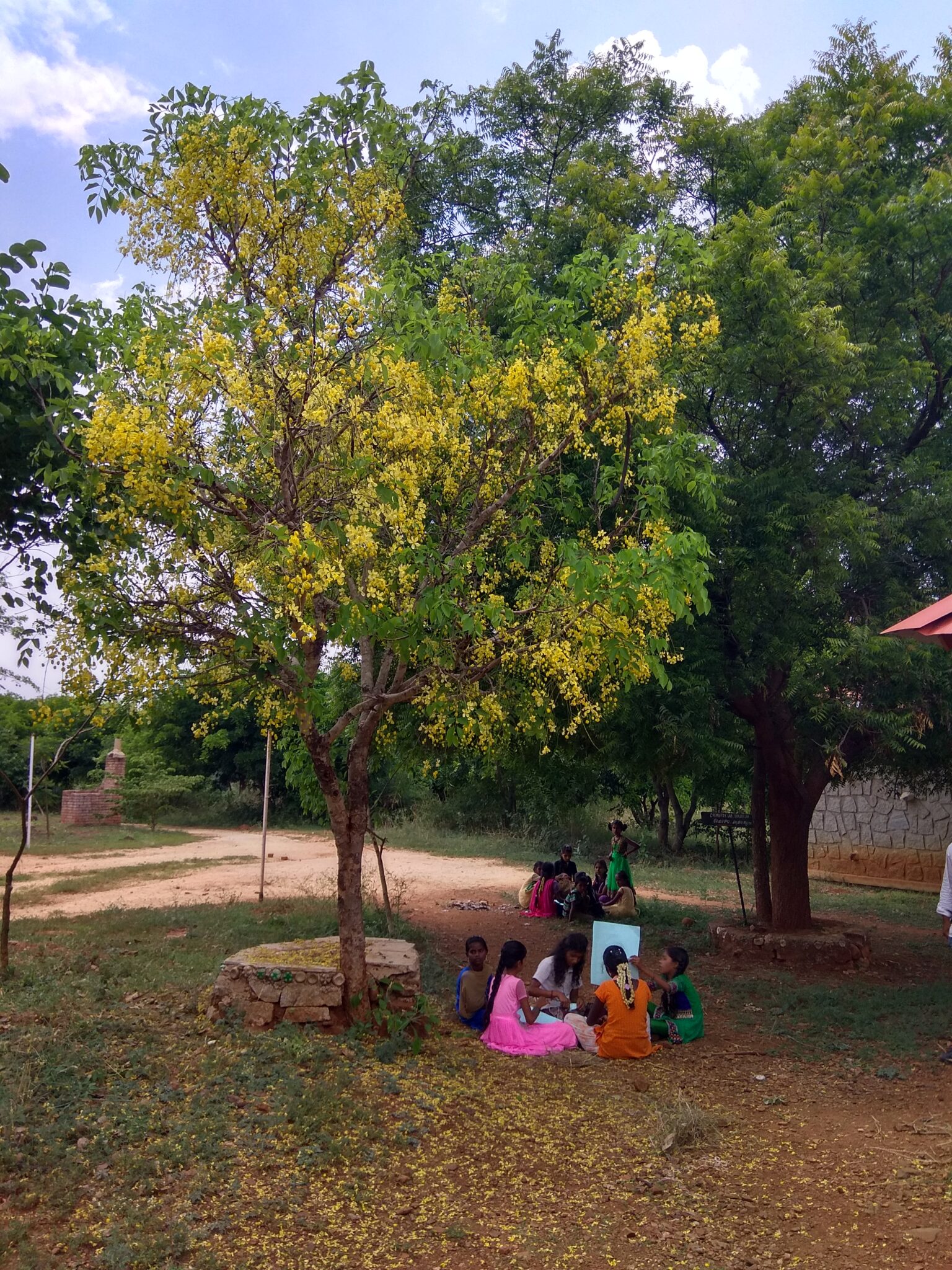
The same roads are still there, but now they are lined with neem and gulmohar. Butterflies hover above hedges. Birds perch on branches. Trees that once blended into the background are identified by name.
The landscape hasn’t changed. The observer has.
SeasonWatch, a nationwide citizen-science programme, asks students, teachers and volunteers to repeatedly monitor the same trees throughout the year, recording when they produce fresh leaves, flowers and fruits. Individually, each observation seems ordinary. Together, they have created a long-term dataset tracking how native trees respond to weather and climate.
For Suhirtha Muhil, Senior Project Coordinator at SeasonWatch, the programme’s educational and scientific goals are inseparable.
“Phenological data simply doesn’t exist for most Indian trees,” she explains. While countries such as the United States possess records spanning decades, India has relied largely on scattered observations. SeasonWatch was created to begin filling that gap, one tree at a time.
Working with education departments, the programme trains teachers to identify local tree species, guide students in making observations and upload records online. Many participating schools are government schools in rural and semi-urban areas.
Nearly 90 per cent of the teachers involved in Coimbatore are women, while Kerala’s partnership with Mathrubhumi‘s SEED programme has expanded the initiative to around 3,000 schools.
The transformation extends beyond botany.
Teachers report that children begin asking different questions. They notice leaf buds, fruits and birds that previously escaped their attention.
According to Muhil, one headmistress put it after a year of participation: “The children no longer walk looking down. They walk looking up.”
That change in perspective is also producing valuable science. By monitoring the same trees year after year, researchers can link flowering and fruiting with rainfall and temperature. The data are shared through the Global Biodiversity Information Facility (GBIF), allowing scientists worldwide to better understand how India’s trees are responding to climate change.
Who owns scientific knowledge?
Technologies such as GPS, satellite imagery and, more recently, artificial intelligence have largely been controlled by governments, researchers and technology companies, rather than by the communities whose landscapes they help document.
Organisations such as the Ashoka Trust for Research in Ecology and the Environment (ATREE) are trying to reverse that relationship by putting these technologies directly into the hands of rural communities — not simply to collect more data, but to help them ask better questions, make informed decisions and retain ownership over the knowledge they generate.
At first glance, GramaMitra, ATREE’s AI-powered WhatsApp chatbot, looks like many other digital assistants. It answers questions about crop management, biodiversity, conservation and forest regulations.
What makes it different is that it learns from the communities using it.
Developed through collaboration with the Soliga community around Karnataka’s Biligiri Ranganathaswamy Temple Tiger Reserve, the chatbot incorporates local observations and feedback to improve its responses and multilingual support. Knowledge flows both ways: communities benefit from scientific information, while researchers refine the system using community knowledge.
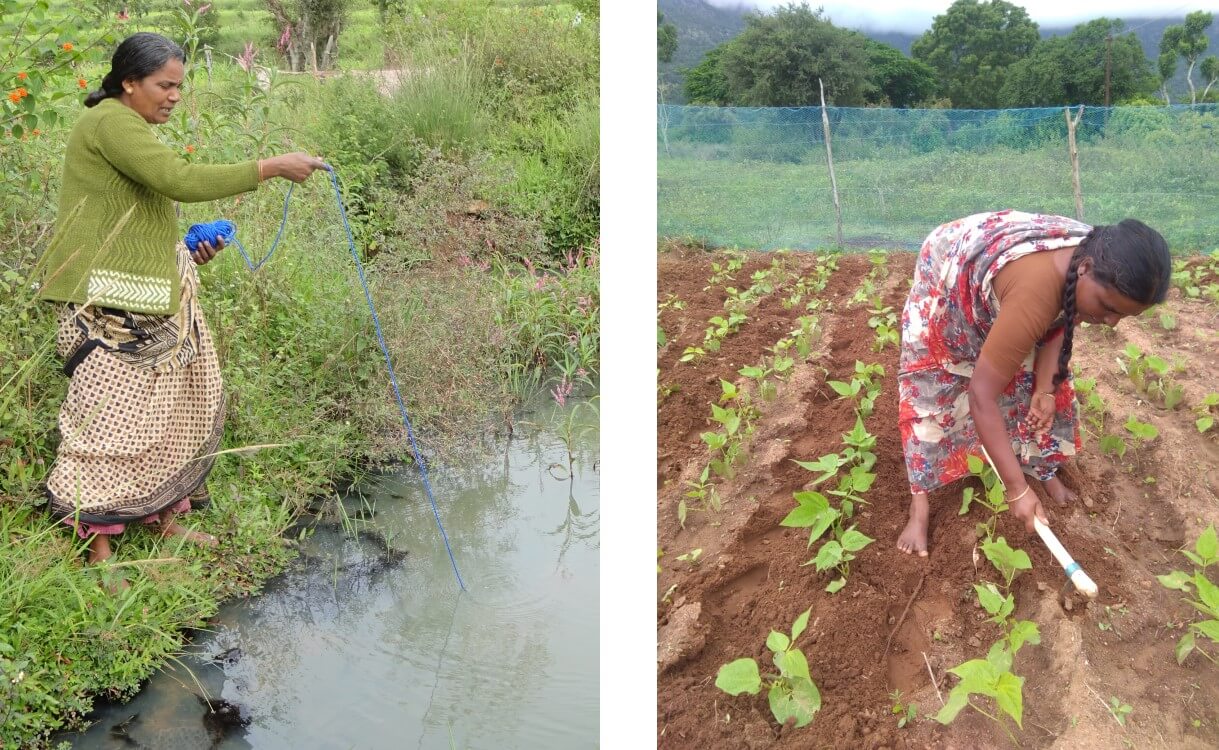
ATREE applies the same philosophy to forest governance.
Across central India, Indigenous communities claiming Community Forest Resource rights have traditionally depended on officials or outside organisations to map their forests using expensive GPS equipment. Even when mapping was completed, the underlying data often remained with government agencies.
ATREE’s WebGIS platform and the Aamcho CFR Mapping app shift that balance. Working offline and in local languages, they enable communities to map their own forests, compare them with official records and retain control over their geospatial data.
In several instances, those maps have helped communities challenge inaccurate boundaries and strengthen their claims over forest resources.
Technology also exposes persistent inequalities. Smartphone access remains gendered in many rural areas, while literacy barriers often limit women’s participation. To address this, ATREE has focused on training women in GPS mapping and digital documentation.
As researchers Seena Karimbumkara and Milind Bunyan point out, however, technology does not create community scientists. It simply removes barriers.
Communities have always generated knowledge through careful observation and lived experience; smartphones, AI and digital mapping merely make that knowledge easier to preserve, share and apply.
The lesson is important: innovation isn’t about bringing science to rural communities, but about making existing knowledge more visible and usable through technology.
While ATREE questions who should own scientific tools, HERA asks a different question.
Who gets to define scientific problems?
Climate science has become increasingly sophisticated at measuring rising temperatures, rainfall patterns and humidity. But it cannot, on its own, explain what extreme heat means for a woman who sells vegetables by the roadside, sorts waste under the afternoon sun or harvests salt for hours on open flats.
Those answers begin with conversation.
That is why HERA, a climate adaptation organisation working with partners including SEWA and the Mahila Housing Trust, starts every programme by listening to women whose lives are shaped by extreme heat.
“We always start with conversations,” says Visala Annamalai, HERA’s Programme Manager for Asia. “These women are living the reality of climate change.”
Rather than asking communities to validate predetermined solutions, HERA asks them what they need.
Women explained that weather warnings sent as smartphone notifications often failed to reach those most at risk. They suggested schools, community radio and familiar messaging platforms as more effective channels. HERA redesigned its early warning systems accordingly, adapting scientific forecasts to the ways communities actually communicate.
Women working in India’s hottest regions described shifting work to the evening to avoid dangerous afternoon temperatures and requested portable solar lamps to travel safely after dark. Those suggestions became part of HERA’s adaptation strategies — not because engineers had proposed them, but because women had.
Perhaps the most significant insight emerged unexpectedly.
Across different communities, women began describing changes in their menstrual cycles during prolonged periods of extreme heat: earlier periods, heavier bleeding and greater discomfort.
Scientific evidence on the relationship was limited. The women, however, had their own observations.
Rather than dismissing those experiences as anecdotal, HERA treated them as research questions. The discussions have since led to investigations into how extreme heat affects menstrual and reproductive health — an area that has received surprisingly little scientific attention despite women making up much of India’s outdoor informal workforce.
Despite their contributions, few of the women in these programmes would describe themselves as scientists.
Yet their work follows the logic of scientific inquiry: they observe patterns, ask questions, test ideas, compare results, revise their understanding and share what they learn with others.
What has long been missing is not scientific practice, but scientific recognition.
Taken together, these stories point to a broader shift.
Science is increasingly emerging through partnerships in which communities do far more than collect data. They define problems, test solutions, interpret evidence and shape the knowledge that follows.
As ATREE’s CFR Central India team puts it, Indigenous communities have accumulated ecological knowledge through generations of careful observation, experimentation and cultural transmission. In many ways, it mirrors the scientific method itself.
“So we can say that they are already scientists,” says the CFR Central India team at ATREE.
Recognition, then, is not simply about giving rural women credit for work they are already doing. It is about expanding our understanding of where science happens, who produces it and whose knowledge counts.
Next week, women of the Nilgiri Biosphere Reserve will walk familiar paths between farms and forests. They’ll observe fresh elephant tracks, compare the flowering of jamun and mango trees with last season, and discuss the timing of the rains.
They will document their observations and return next month to share what they have learned with neighbours and researchers — continuing a form of scientific practice that has existed outside traditional scientific institutions for generations.

About the author
Puja Bhattacharjee is an independent journalist based in Kolkata and writes about health, science, environment, gender, justice, rights, policy and culture.
Add a Comment